Get trending papers in your email inbox once a day!
Get trending papers in your email inbox!
Subscribe
DCT-Net: Domain-Calibrated Translation for Portrait Stylization
This paper introduces DCT-Net, a novel image translation architecture for few-shot portrait stylization. Given limited style exemplars (sim100), the new architecture can produce high-quality style transfer results with advanced ability to synthesize high-fidelity contents and strong generality to handle complicated scenes (e.g., occlusions and accessories). Moreover, it enables full-body image translation via one elegant evaluation network trained by partial observations (i.e., stylized heads). Few-shot learning based style transfer is challenging since the learned model can easily become overfitted in the target domain, due to the biased distribution formed by only a few training examples. This paper aims to handle the challenge by adopting the key idea of "calibration first, translation later" and exploring the augmented global structure with locally-focused translation. Specifically, the proposed DCT-Net consists of three modules: a content adapter borrowing the powerful prior from source photos to calibrate the content distribution of target samples; a geometry expansion module using affine transformations to release spatially semantic constraints; and a texture translation module leveraging samples produced by the calibrated distribution to learn a fine-grained conversion. Experimental results demonstrate the proposed method's superiority over the state of the art in head stylization and its effectiveness on full image translation with adaptive deformations.
Multi-Curve Translator for High-Resolution Photorealistic Image Translation
The dominant image-to-image translation methods are based on fully convolutional networks, which extract and translate an image's features and then reconstruct the image. However, they have unacceptable computational costs when working with high-resolution images. To this end, we present the Multi-Curve Translator (MCT), which not only predicts the translated pixels for the corresponding input pixels but also for their neighboring pixels. And if a high-resolution image is downsampled to its low-resolution version, the lost pixels are the remaining pixels' neighboring pixels. So MCT makes it possible to feed the network only the downsampled image to perform the mapping for the full-resolution image, which can dramatically lower the computational cost. Besides, MCT is a plug-in approach that utilizes existing base models and requires only replacing their output layers. Experiments demonstrate that the MCT variants can process 4K images in real-time and achieve comparable or even better performance than the base models on various photorealistic image-to-image translation tasks.

Erase to Enhance: Data-Efficient Machine Unlearning in MRI Reconstruction
Machine unlearning is a promising paradigm for removing unwanted data samples from a trained model, towards ensuring compliance with privacy regulations and limiting harmful biases. Although unlearning has been shown in, e.g., classification and recommendation systems, its potential in medical image-to-image translation, specifically in image recon-struction, has not been thoroughly investigated. This paper shows that machine unlearning is possible in MRI tasks and has the potential to benefit for bias removal. We set up a protocol to study how much shared knowledge exists between datasets of different organs, allowing us to effectively quantify the effect of unlearning. Our study reveals that combining training data can lead to hallucinations and reduced image quality in the reconstructed data. We use unlearning to remove hallucinations as a proxy exemplar of undesired data removal. Indeed, we show that machine unlearning is possible without full retraining. Furthermore, our observations indicate that maintaining high performance is feasible even when using only a subset of retain data. We have made our code publicly accessible.

WorldGPT: A Sora-Inspired Video AI Agent as Rich World Models from Text and Image Inputs
Several text-to-video diffusion models have demonstrated commendable capabilities in synthesizing high-quality video content. However, it remains a formidable challenge pertaining to maintaining temporal consistency and ensuring action smoothness throughout the generated sequences. In this paper, we present an innovative video generation AI agent that harnesses the power of Sora-inspired multimodal learning to build skilled world models framework based on textual prompts and accompanying images. The framework includes two parts: prompt enhancer and full video translation. The first part employs the capabilities of ChatGPT to meticulously distill and proactively construct precise prompts for each subsequent step, thereby guaranteeing the utmost accuracy in prompt communication and accurate execution in following model operations. The second part employ compatible with existing advanced diffusion techniques to expansively generate and refine the key frame at the conclusion of a video. Then we can expertly harness the power of leading and trailing key frames to craft videos with enhanced temporal consistency and action smoothness. The experimental results confirm that our method has strong effectiveness and novelty in constructing world models from text and image inputs over the other methods.
Generative Video Motion Editing with 3D Point Tracks
Camera and object motions are central to a video's narrative. However, precisely editing these captured motions remains a significant challenge, especially under complex object movements. Current motion-controlled image-to-video (I2V) approaches often lack full-scene context for consistent video editing, while video-to-video (V2V) methods provide viewpoint changes or basic object translation, but offer limited control over fine-grained object motion. We present a track-conditioned V2V framework that enables joint editing of camera and object motion. We achieve this by conditioning a video generation model on a source video and paired 3D point tracks representing source and target motions. These 3D tracks establish sparse correspondences that transfer rich context from the source video to new motions while preserving spatiotemporal coherence. Crucially, compared to 2D tracks, 3D tracks provide explicit depth cues, allowing the model to resolve depth order and handle occlusions for precise motion editing. Trained in two stages on synthetic and real data, our model supports diverse motion edits, including joint camera/object manipulation, motion transfer, and non-rigid deformation, unlocking new creative potential in video editing.

MIT-10M: A Large Scale Parallel Corpus of Multilingual Image Translation
Image Translation (IT) holds immense potential across diverse domains, enabling the translation of textual content within images into various languages. However, existing datasets often suffer from limitations in scale, diversity, and quality, hindering the development and evaluation of IT models. To address this issue, we introduce MIT-10M, a large-scale parallel corpus of multilingual image translation with over 10M image-text pairs derived from real-world data, which has undergone extensive data cleaning and multilingual translation validation. It contains 840K images in three sizes, 28 categories, tasks with three levels of difficulty and 14 languages image-text pairs, which is a considerable improvement on existing datasets. We conduct extensive experiments to evaluate and train models on MIT-10M. The experimental results clearly indicate that our dataset has higher adaptability when it comes to evaluating the performance of the models in tackling challenging and complex image translation tasks in the real world. Moreover, the performance of the model fine-tuned with MIT-10M has tripled compared to the baseline model, further confirming its superiority.

Unpaired Image-to-Image Translation using Cycle-Consistent Adversarial Networks
Image-to-image translation is a class of vision and graphics problems where the goal is to learn the mapping between an input image and an output image using a training set of aligned image pairs. However, for many tasks, paired training data will not be available. We present an approach for learning to translate an image from a source domain X to a target domain Y in the absence of paired examples. Our goal is to learn a mapping G: X rightarrow Y such that the distribution of images from G(X) is indistinguishable from the distribution Y using an adversarial loss. Because this mapping is highly under-constrained, we couple it with an inverse mapping F: Y rightarrow X and introduce a cycle consistency loss to push F(G(X)) approx X (and vice versa). Qualitative results are presented on several tasks where paired training data does not exist, including collection style transfer, object transfiguration, season transfer, photo enhancement, etc. Quantitative comparisons against several prior methods demonstrate the superiority of our approach.
T2Vid: Translating Long Text into Multi-Image is the Catalyst for Video-LLMs
The success of Multimodal Large Language Models (MLLMs) in the image domain has garnered wide attention from the research community. Drawing on previous successful experiences, researchers have recently explored extending the success to the video understanding realms. Apart from training from scratch, an efficient way is to utilize the pre-trained image-LLMs, leading to two mainstream approaches, i.e. zero-shot inference and further fine-tuning with video data. In this work, our study of these approaches harvests an effective data augmentation method. We first make a deeper inspection of the zero-shot inference way and identify two limitations, i.e. limited generalization and lack of temporal understanding capabilities. Thus, we further investigate the fine-tuning approach and find a low learning efficiency when simply using all the video data samples, which can be attributed to a lack of instruction diversity. Aiming at this issue, we develop a method called T2Vid to synthesize video-like samples to enrich the instruction diversity in the training corpus. Integrating these data enables a simple and efficient training scheme, which achieves performance comparable to or even superior to using full video datasets by training with just 15% the sample size. Meanwhile, we find that the proposed scheme can boost the performance of long video understanding without training with long video samples. We hope our study will spark more thinking about using MLLMs for video understanding and curation of high-quality data. The code is released at https://github.com/xjtupanda/T2Vid.

m3P: Towards Multimodal Multilingual Translation with Multimodal Prompt
Multilingual translation supports multiple translation directions by projecting all languages in a shared space, but the translation quality is undermined by the difference between languages in the text-only modality, especially when the number of languages is large. To bridge this gap, we introduce visual context as the universal language-independent representation to facilitate multilingual translation. In this paper, we propose a framework to leverage the multimodal prompt to guide the Multimodal Multilingual neural Machine Translation (m3P), which aligns the representations of different languages with the same meaning and generates the conditional vision-language memory for translation. We construct a multilingual multimodal instruction dataset (InstrMulti102) to support 102 languages. Our method aims to minimize the representation distance of different languages by regarding the image as a central language. Experimental results show that m3P outperforms previous text-only baselines and multilingual multimodal methods by a large margin. Furthermore, the probing experiments validate the effectiveness of our method in enhancing translation under the low-resource and massively multilingual scenario.




An image speaks a thousand words, but can everyone listen? On image transcreation for cultural relevance
Given the rise of multimedia content, human translators increasingly focus on culturally adapting not only words but also other modalities such as images to convey the same meaning. While several applications stand to benefit from this, machine translation systems remain confined to dealing with language in speech and text. In this work, we take a first step towards translating images to make them culturally relevant. First, we build three pipelines comprising state-of-the-art generative models to do the task. Next, we build a two-part evaluation dataset: i) concept: comprising 600 images that are cross-culturally coherent, focusing on a single concept per image, and ii) application: comprising 100 images curated from real-world applications. We conduct a multi-faceted human evaluation of translated images to assess for cultural relevance and meaning preservation. We find that as of today, image-editing models fail at this task, but can be improved by leveraging LLMs and retrievers in the loop. Best pipelines can only translate 5% of images for some countries in the easier concept dataset and no translation is successful for some countries in the application dataset, highlighting the challenging nature of the task. Our code and data is released here: https://github.com/simran-khanuja/image-transcreation.
An Analysis for Image-to-Image Translation and Style Transfer
With the development of generative technologies in deep learning, a large number of image-to-image translation and style transfer models have emerged at an explosive rate in recent years. These two technologies have made significant progress and can generate realistic images. However, many communities tend to confuse the two, because both generate the desired image based on the input image and both cover the two definitions of content and style. In fact, there are indeed significant differences between the two, and there is currently a lack of clear explanations to distinguish the two technologies, which is not conducive to the advancement of technology. We hope to serve the entire community by introducing the differences and connections between image-to-image translation and style transfer. The entire discussion process involves the concepts, forms, training modes, evaluation processes, and visualization results of the two technologies. Finally, we conclude that image-to-image translation divides images by domain, and the types of images in the domain are limited, and the scope involved is small, but the conversion ability is strong and can achieve strong semantic changes. Style transfer divides image types by single image, and the scope involved is large, but the transfer ability is limited, and it transfers more texture and color of the image.
Lost in Translation: Modern Neural Networks Still Struggle With Small Realistic Image Transformations
Deep neural networks that achieve remarkable performance in image classification have previously been shown to be easily fooled by tiny transformations such as a one pixel translation of the input image. In order to address this problem, two approaches have been proposed in recent years. The first approach suggests using huge datasets together with data augmentation in the hope that a highly varied training set will teach the network to learn to be invariant. The second approach suggests using architectural modifications based on sampling theory to deal explicitly with image translations. In this paper, we show that these approaches still fall short in robustly handling 'natural' image translations that simulate a subtle change in camera orientation. Our findings reveal that a mere one-pixel translation can result in a significant change in the predicted image representation for approximately 40% of the test images in state-of-the-art models (e.g. open-CLIP trained on LAION-2B or DINO-v2) , while models that are explicitly constructed to be robust to cyclic translations can still be fooled with 1 pixel realistic (non-cyclic) translations 11% of the time. We present Robust Inference by Crop Selection: a simple method that can be proven to achieve any desired level of consistency, although with a modest tradeoff with the model's accuracy. Importantly, we demonstrate how employing this method reduces the ability to fool state-of-the-art models with a 1 pixel translation to less than 5% while suffering from only a 1% drop in classification accuracy. Additionally, we show that our method can be easy adjusted to deal with circular shifts as well. In such case we achieve 100% robustness to integer shifts with state-of-the-art accuracy, and with no need for any further training.
Bridging the Gap between Synthetic and Authentic Images for Multimodal Machine Translation
Multimodal machine translation (MMT) simultaneously takes the source sentence and a relevant image as input for translation. Since there is no paired image available for the input sentence in most cases, recent studies suggest utilizing powerful text-to-image generation models to provide image inputs. Nevertheless, synthetic images generated by these models often follow different distributions compared to authentic images. Consequently, using authentic images for training and synthetic images for inference can introduce a distribution shift, resulting in performance degradation during inference. To tackle this challenge, in this paper, we feed synthetic and authentic images to the MMT model, respectively. Then we minimize the gap between the synthetic and authentic images by drawing close the input image representations of the Transformer Encoder and the output distributions of the Transformer Decoder. Therefore, we mitigate the distribution disparity introduced by the synthetic images during inference, thereby freeing the authentic images from the inference process.Experimental results show that our approach achieves state-of-the-art performance on the Multi30K En-De and En-Fr datasets, while remaining independent of authentic images during inference.


General Image-to-Image Translation with One-Shot Image Guidance
Large-scale text-to-image models pre-trained on massive text-image pairs show excellent performance in image synthesis recently. However, image can provide more intuitive visual concepts than plain text. People may ask: how can we integrate the desired visual concept into an existing image, such as our portrait? Current methods are inadequate in meeting this demand as they lack the ability to preserve content or translate visual concepts effectively. Inspired by this, we propose a novel framework named visual concept translator (VCT) with the ability to preserve content in the source image and translate the visual concepts guided by a single reference image. The proposed VCT contains a content-concept inversion (CCI) process to extract contents and concepts, and a content-concept fusion (CCF) process to gather the extracted information to obtain the target image. Given only one reference image, the proposed VCT can complete a wide range of general image-to-image translation tasks with excellent results. Extensive experiments are conducted to prove the superiority and effectiveness of the proposed methods. Codes are available at https://github.com/CrystalNeuro/visual-concept-translator.
Image-to-Image Translation with Diffusion Transformers and CLIP-Based Image Conditioning
Image-to-image translation aims to learn a mapping between a source and a target domain, enabling tasks such as style transfer, appearance transformation, and domain adaptation. In this work, we explore a diffusion-based framework for image-to-image translation by adapting Diffusion Transformers (DiT), which combine the denoising capabilities of diffusion models with the global modeling power of transformers. To guide the translation process, we condition the model on image embeddings extracted from a pre-trained CLIP encoder, allowing for fine-grained and structurally consistent translations without relying on text or class labels. We incorporate both a CLIP similarity loss to enforce semantic consistency and an LPIPS perceptual loss to enhance visual fidelity during training. We validate our approach on two benchmark datasets: face2comics, which translates real human faces to comic-style illustrations, and edges2shoes, which translates edge maps to realistic shoe images. Experimental results demonstrate that DiT, combined with CLIP-based conditioning and perceptual similarity objectives, achieves high-quality, semantically faithful translations, offering a promising alternative to GAN-based models for paired image-to-image translation tasks.
CaMMT: Benchmarking Culturally Aware Multimodal Machine Translation
Cultural content poses challenges for machine translation systems due to the differences in conceptualizations between cultures, where language alone may fail to convey sufficient context to capture region-specific meanings. In this work, we investigate whether images can act as cultural context in multimodal translation. We introduce CaMMT, a human-curated benchmark of over 5,800 triples of images along with parallel captions in English and regional languages. Using this dataset, we evaluate five Vision Language Models (VLMs) in text-only and text+image settings. Through automatic and human evaluations, we find that visual context generally improves translation quality, especially in handling Culturally-Specific Items (CSIs), disambiguation, and correct gender usage. By releasing CaMMT, we aim to support broader efforts in building and evaluating multimodal translation systems that are better aligned with cultural nuance and regional variation.


PRIM: Towards Practical In-Image Multilingual Machine Translation
In-Image Machine Translation (IIMT) aims to translate images containing texts from one language to another. Current research of end-to-end IIMT mainly conducts on synthetic data, with simple background, single font, fixed text position, and bilingual translation, which can not fully reflect real world, causing a significant gap between the research and practical conditions. To facilitate research of IIMT in real-world scenarios, we explore Practical In-Image Multilingual Machine Translation (IIMMT). In order to convince the lack of publicly available data, we annotate the PRIM dataset, which contains real-world captured one-line text images with complex background, various fonts, diverse text positions, and supports multilingual translation directions. We propose an end-to-end model VisTrans to handle the challenge of practical conditions in PRIM, which processes visual text and background information in the image separately, ensuring the capability of multilingual translation while improving the visual quality. Experimental results indicate the VisTrans achieves a better translation quality and visual effect compared to other models. The code and dataset are available at: https://github.com/BITHLP/PRIM.

CLIPTrans: Transferring Visual Knowledge with Pre-trained Models for Multimodal Machine Translation
There has been a growing interest in developing multimodal machine translation (MMT) systems that enhance neural machine translation (NMT) with visual knowledge. This problem setup involves using images as auxiliary information during training, and more recently, eliminating their use during inference. Towards this end, previous works face a challenge in training powerful MMT models from scratch due to the scarcity of annotated multilingual vision-language data, especially for low-resource languages. Simultaneously, there has been an influx of multilingual pre-trained models for NMT and multimodal pre-trained models for vision-language tasks, primarily in English, which have shown exceptional generalisation ability. However, these are not directly applicable to MMT since they do not provide aligned multimodal multilingual features for generative tasks. To alleviate this issue, instead of designing complex modules for MMT, we propose CLIPTrans, which simply adapts the independently pre-trained multimodal M-CLIP and the multilingual mBART. In order to align their embedding spaces, mBART is conditioned on the M-CLIP features by a prefix sequence generated through a lightweight mapping network. We train this in a two-stage pipeline which warms up the model with image captioning before the actual translation task. Through experiments, we demonstrate the merits of this framework and consequently push forward the state-of-the-art across standard benchmarks by an average of +2.67 BLEU. The code can be found at www.github.com/devaansh100/CLIPTrans.



mBLIP: Efficient Bootstrapping of Multilingual Vision-LLMs
Modular vision-language models (Vision-LLMs) align pretrained image encoders with (pretrained) large language models (LLMs), representing a computationally much more efficient alternative to end-to-end training of large vision-language models from scratch, which is prohibitively expensive for most. Vision-LLMs instead post-hoc condition LLMs to `understand' the output of an image encoder. With the abundance of readily available high-quality English image-text data as well as monolingual English LLMs, the research focus has been on English-only Vision-LLMs. Multilingual vision-language models are still predominantly obtained via expensive end-to-end pretraining, resulting in comparatively smaller models, trained on limited multilingual image data supplemented with text-only multilingual corpora. In this work, we present mBLIP, the first multilingual Vision-LLM, which we obtain in a computationally efficient manner -- on consumer hardware using only a few million training examples -- by leveraging a pretrained multilingual LLM. To this end, we re-align an image encoder previously tuned to an English LLM to a new, multilingual LLM -- for this, we leverage multilingual data from a mix of vision-and-language tasks, which we obtain by machine-translating high-quality English data to 95 languages. On the IGLUE benchmark, mBLIP yields results competitive with state-of-the-art models. Moreover, in image captioning on XM3600, mBLIP (zero-shot) even outperforms PaLI-X (a model with 55B parameters). Compared to these very large multilingual vision-language models trained from scratch, we obtain mBLIP by training orders of magnitude fewer parameters on magnitudes less data. We release our model and code at https://github.com/gregor-ge/mBLIP.

Few-Shot Unsupervised Image-to-Image Translation
Unsupervised image-to-image translation methods learn to map images in a given class to an analogous image in a different class, drawing on unstructured (non-registered) datasets of images. While remarkably successful, current methods require access to many images in both source and destination classes at training time. We argue this greatly limits their use. Drawing inspiration from the human capability of picking up the essence of a novel object from a small number of examples and generalizing from there, we seek a few-shot, unsupervised image-to-image translation algorithm that works on previously unseen target classes that are specified, at test time, only by a few example images. Our model achieves this few-shot generation capability by coupling an adversarial training scheme with a novel network design. Through extensive experimental validation and comparisons to several baseline methods on benchmark datasets, we verify the effectiveness of the proposed framework. Our implementation and datasets are available at https://github.com/NVlabs/FUNIT .


StegoGAN: Leveraging Steganography for Non-Bijective Image-to-Image Translation
Most image-to-image translation models postulate that a unique correspondence exists between the semantic classes of the source and target domains. However, this assumption does not always hold in real-world scenarios due to divergent distributions, different class sets, and asymmetrical information representation. As conventional GANs attempt to generate images that match the distribution of the target domain, they may hallucinate spurious instances of classes absent from the source domain, thereby diminishing the usefulness and reliability of translated images. CycleGAN-based methods are also known to hide the mismatched information in the generated images to bypass cycle consistency objectives, a process known as steganography. In response to the challenge of non-bijective image translation, we introduce StegoGAN, a novel model that leverages steganography to prevent spurious features in generated images. Our approach enhances the semantic consistency of the translated images without requiring additional postprocessing or supervision. Our experimental evaluations demonstrate that StegoGAN outperforms existing GAN-based models across various non-bijective image-to-image translation tasks, both qualitatively and quantitatively. Our code and pretrained models are accessible at https://github.com/sian-wusidi/StegoGAN.


Image-to-Image Translation via Group-wise Deep Whitening-and-Coloring Transformation
Recently, unsupervised exemplar-based image-to-image translation, conditioned on a given exemplar without the paired data, has accomplished substantial advancements. In order to transfer the information from an exemplar to an input image, existing methods often use a normalization technique, e.g., adaptive instance normalization, that controls the channel-wise statistics of an input activation map at a particular layer, such as the mean and the variance. Meanwhile, style transfer approaches similar task to image translation by nature, demonstrated superior performance by using the higher-order statistics such as covariance among channels in representing a style. In detail, it works via whitening (given a zero-mean input feature, transforming its covariance matrix into the identity). followed by coloring (changing the covariance matrix of the whitened feature to those of the style feature). However, applying this approach in image translation is computationally intensive and error-prone due to the expensive time complexity and its non-trivial backpropagation. In response, this paper proposes an end-to-end approach tailored for image translation that efficiently approximates this transformation with our novel regularization methods. We further extend our approach to a group-wise form for memory and time efficiency as well as image quality. Extensive qualitative and quantitative experiments demonstrate that our proposed method is fast, both in training and inference, and highly effective in reflecting the style of an exemplar. Finally, our code is available at https://github.com/WonwoongCho/GDWCT.

FullAnno: A Data Engine for Enhancing Image Comprehension of MLLMs
Multimodal Large Language Models (MLLMs) have shown promise in a broad range of vision-language tasks with their strong reasoning and generalization capabilities. However, they heavily depend on high-quality data in the Supervised Fine-Tuning (SFT) phase. The existing approaches aim to curate high-quality data via GPT-4V, but they are not scalable due to the commercial nature of GPT-4V and the simplicity of the prompts used to instruct the model. To this end, we devised the FullAnno system, which is a data engine that can generate large-scale, high-quality, and fine-grained image annotations consisting of the category and position of objects, region descriptions, text information, as well as image dense captions. This engine is characterized by its cascade annotation process, which involves multiple expert models and employs rich prompts to instruct LLMs in generating dense image captions. We re-annotated the COCO and Visual Genome datasets using our FullAnno system, tripling the number of object annotations and increasing the length of the original image captions by a factor of 15. Experiments show that the regenerated annotation can significantly enhance the capabilities of LLaVA-v1.5 on several benchmarks. The re-annotated data are available at: https://arcana-project-page.github.io


HalluciDet: Hallucinating RGB Modality for Person Detection Through Privileged Information
A powerful way to adapt a visual recognition model to a new domain is through image translation. However, common image translation approaches only focus on generating data from the same distribution as the target domain. Given a cross-modal application, such as pedestrian detection from aerial images, with a considerable shift in data distribution between infrared (IR) to visible (RGB) images, a translation focused on generation might lead to poor performance as the loss focuses on irrelevant details for the task. In this paper, we propose HalluciDet, an IR-RGB image translation model for object detection. Instead of focusing on reconstructing the original image on the IR modality, it seeks to reduce the detection loss of an RGB detector, and therefore avoids the need to access RGB data. This model produces a new image representation that enhances objects of interest in the scene and greatly improves detection performance. We empirically compare our approach against state-of-the-art methods for image translation and for fine-tuning on IR, and show that our HalluciDet improves detection accuracy in most cases by exploiting the privileged information encoded in a pre-trained RGB detector. Code: https://github.com/heitorrapela/HalluciDet

Bringing Old Photos Back to Life
We propose to restore old photos that suffer from severe degradation through a deep learning approach. Unlike conventional restoration tasks that can be solved through supervised learning, the degradation in real photos is complex and the domain gap between synthetic images and real old photos makes the network fail to generalize. Therefore, we propose a novel triplet domain translation network by leveraging real photos along with massive synthetic image pairs. Specifically, we train two variational autoencoders (VAEs) to respectively transform old photos and clean photos into two latent spaces. And the translation between these two latent spaces is learned with synthetic paired data. This translation generalizes well to real photos because the domain gap is closed in the compact latent space. Besides, to address multiple degradations mixed in one old photo, we design a global branch with a partial nonlocal block targeting to the structured defects, such as scratches and dust spots, and a local branch targeting to the unstructured defects, such as noises and blurriness. Two branches are fused in the latent space, leading to improved capability to restore old photos from multiple defects. The proposed method outperforms state-of-the-art methods in terms of visual quality for old photos restoration.

Diffusion-based Image Translation with Label Guidance for Domain Adaptive Semantic Segmentation
Translating images from a source domain to a target domain for learning target models is one of the most common strategies in domain adaptive semantic segmentation (DASS). However, existing methods still struggle to preserve semantically-consistent local details between the original and translated images. In this work, we present an innovative approach that addresses this challenge by using source-domain labels as explicit guidance during image translation. Concretely, we formulate cross-domain image translation as a denoising diffusion process and utilize a novel Semantic Gradient Guidance (SGG) method to constrain the translation process, conditioning it on the pixel-wise source labels. Additionally, a Progressive Translation Learning (PTL) strategy is devised to enable the SGG method to work reliably across domains with large gaps. Extensive experiments demonstrate the superiority of our approach over state-of-the-art methods.

TSIT: A Simple and Versatile Framework for Image-to-Image Translation
We introduce a simple and versatile framework for image-to-image translation. We unearth the importance of normalization layers, and provide a carefully designed two-stream generative model with newly proposed feature transformations in a coarse-to-fine fashion. This allows multi-scale semantic structure information and style representation to be effectively captured and fused by the network, permitting our method to scale to various tasks in both unsupervised and supervised settings. No additional constraints (e.g., cycle consistency) are needed, contributing to a very clean and simple method. Multi-modal image synthesis with arbitrary style control is made possible. A systematic study compares the proposed method with several state-of-the-art task-specific baselines, verifying its effectiveness in both perceptual quality and quantitative evaluations.
FashionR2R: Texture-preserving Rendered-to-Real Image Translation with Diffusion Models
Modeling and producing lifelike clothed human images has attracted researchers' attention from different areas for decades, with the complexity from highly articulated and structured content. Rendering algorithms decompose and simulate the imaging process of a camera, while are limited by the accuracy of modeled variables and the efficiency of computation. Generative models can produce impressively vivid human images, however still lacking in controllability and editability. This paper studies photorealism enhancement of rendered images, leveraging generative power from diffusion models on the controlled basis of rendering. We introduce a novel framework to translate rendered images into their realistic counterparts, which consists of two stages: Domain Knowledge Injection (DKI) and Realistic Image Generation (RIG). In DKI, we adopt positive (real) domain finetuning and negative (rendered) domain embedding to inject knowledge into a pretrained Text-to-image (T2I) diffusion model. In RIG, we generate the realistic image corresponding to the input rendered image, with a Texture-preserving Attention Control (TAC) to preserve fine-grained clothing textures, exploiting the decoupled features encoded in the UNet structure. Additionally, we introduce SynFashion dataset, featuring high-quality digital clothing images with diverse textures. Extensive experimental results demonstrate the superiority and effectiveness of our method in rendered-to-real image translation.
Scaling Autoregressive Models for Content-Rich Text-to-Image Generation
We present the Pathways Autoregressive Text-to-Image (Parti) model, which generates high-fidelity photorealistic images and supports content-rich synthesis involving complex compositions and world knowledge. Parti treats text-to-image generation as a sequence-to-sequence modeling problem, akin to machine translation, with sequences of image tokens as the target outputs rather than text tokens in another language. This strategy can naturally tap into the rich body of prior work on large language models, which have seen continued advances in capabilities and performance through scaling data and model sizes. Our approach is simple: First, Parti uses a Transformer-based image tokenizer, ViT-VQGAN, to encode images as sequences of discrete tokens. Second, we achieve consistent quality improvements by scaling the encoder-decoder Transformer model up to 20B parameters, with a new state-of-the-art zero-shot FID score of 7.23 and finetuned FID score of 3.22 on MS-COCO. Our detailed analysis on Localized Narratives as well as PartiPrompts (P2), a new holistic benchmark of over 1600 English prompts, demonstrate the effectiveness of Parti across a wide variety of categories and difficulty aspects. We also explore and highlight limitations of our models in order to define and exemplify key areas of focus for further improvements. See https://parti.research.google/ for high-resolution images.
Plug-and-Play Diffusion Features for Text-Driven Image-to-Image Translation
Large-scale text-to-image generative models have been a revolutionary breakthrough in the evolution of generative AI, allowing us to synthesize diverse images that convey highly complex visual concepts. However, a pivotal challenge in leveraging such models for real-world content creation tasks is providing users with control over the generated content. In this paper, we present a new framework that takes text-to-image synthesis to the realm of image-to-image translation -- given a guidance image and a target text prompt, our method harnesses the power of a pre-trained text-to-image diffusion model to generate a new image that complies with the target text, while preserving the semantic layout of the source image. Specifically, we observe and empirically demonstrate that fine-grained control over the generated structure can be achieved by manipulating spatial features and their self-attention inside the model. This results in a simple and effective approach, where features extracted from the guidance image are directly injected into the generation process of the target image, requiring no training or fine-tuning and applicable for both real or generated guidance images. We demonstrate high-quality results on versatile text-guided image translation tasks, including translating sketches, rough drawings and animations into realistic images, changing of the class and appearance of objects in a given image, and modifications of global qualities such as lighting and color.
Diffusion-based Image Translation using Disentangled Style and Content Representation
Diffusion-based image translation guided by semantic texts or a single target image has enabled flexible style transfer which is not limited to the specific domains. Unfortunately, due to the stochastic nature of diffusion models, it is often difficult to maintain the original content of the image during the reverse diffusion. To address this, here we present a novel diffusion-based unsupervised image translation method using disentangled style and content representation. Specifically, inspired by the splicing Vision Transformer, we extract intermediate keys of multihead self attention layer from ViT model and used them as the content preservation loss. Then, an image guided style transfer is performed by matching the [CLS] classification token from the denoised samples and target image, whereas additional CLIP loss is used for the text-driven style transfer. To further accelerate the semantic change during the reverse diffusion, we also propose a novel semantic divergence loss and resampling strategy. Our experimental results show that the proposed method outperforms state-of-the-art baseline models in both text-guided and image-guided translation tasks.
Pretraining is All You Need for Image-to-Image Translation
We propose to use pretraining to boost general image-to-image translation. Prior image-to-image translation methods usually need dedicated architectural design and train individual translation models from scratch, struggling for high-quality generation of complex scenes, especially when paired training data are not abundant. In this paper, we regard each image-to-image translation problem as a downstream task and introduce a simple and generic framework that adapts a pretrained diffusion model to accommodate various kinds of image-to-image translation. We also propose adversarial training to enhance the texture synthesis in the diffusion model training, in conjunction with normalized guidance sampling to improve the generation quality. We present extensive empirical comparison across various tasks on challenging benchmarks such as ADE20K, COCO-Stuff, and DIODE, showing the proposed pretraining-based image-to-image translation (PITI) is capable of synthesizing images of unprecedented realism and faithfulness.
Florenz: Scaling Laws for Systematic Generalization in Vision-Language Models
Cross-lingual transfer enables vision-language models (VLMs) to perform vision tasks in various languages with training data only in one language. Current approaches rely on large pre-trained multilingual language models. However, they face the curse of multilinguality, sacrificing downstream task performance for multilingual capabilities, struggling with lexical ambiguities, and falling behind recent advances. In this work, we study the scaling laws of systematic generalization with monolingual VLMs for multilingual tasks, focusing on the impact of model size and seen training samples. We propose Florenz, a monolingual encoder-decoder VLM with 0.4B to 11.2B parameters combining the pre-trained VLM Florence-2 and the large language model Gemma-2. Florenz is trained with varying compute budgets on a synthetic dataset that features intentionally incomplete language coverage for image captioning, thus, testing generalization from the fully covered translation task. We show that not only does indirectly learning unseen task-language pairs adhere to a scaling law, but also that with our data generation pipeline and the proposed Florenz model family, image captioning abilities can emerge in a specific language even when only data for the translation task is available. Fine-tuning on a mix of downstream datasets yields competitive performance and demonstrates promising scaling trends in multimodal machine translation (Multi30K, CoMMuTE), lexical disambiguation (CoMMuTE), and image captioning (Multi30K, XM3600, COCO Karpathy).



LongCat-Image Technical Report
We introduce LongCat-Image, a pioneering open-source and bilingual (Chinese-English) foundation model for image generation, designed to address core challenges in multilingual text rendering, photorealism, deployment efficiency, and developer accessibility prevalent in current leading models. 1) We achieve this through rigorous data curation strategies across the pre-training, mid-training, and SFT stages, complemented by the coordinated use of curated reward models during the RL phase. This strategy establishes the model as a new state-of-the-art (SOTA), delivering superior text-rendering capabilities and remarkable photorealism, and significantly enhancing aesthetic quality. 2) Notably, it sets a new industry standard for Chinese character rendering. By supporting even complex and rare characters, it outperforms both major open-source and commercial solutions in coverage, while also achieving superior accuracy. 3) The model achieves remarkable efficiency through its compact design. With a core diffusion model of only 6B parameters, it is significantly smaller than the nearly 20B or larger Mixture-of-Experts (MoE) architectures common in the field. This ensures minimal VRAM usage and rapid inference, significantly reducing deployment costs. Beyond generation, LongCat-Image also excels in image editing, achieving SOTA results on standard benchmarks with superior editing consistency compared to other open-source works. 4) To fully empower the community, we have established the most comprehensive open-source ecosystem to date. We are releasing not only multiple model versions for text-to-image and image editing, including checkpoints after mid-training and post-training stages, but also the entire toolchain of training procedure. We believe that the openness of LongCat-Image will provide robust support for developers and researchers, pushing the frontiers of visual content creation.

Old Photo Restoration via Deep Latent Space Translation
We propose to restore old photos that suffer from severe degradation through a deep learning approach. Unlike conventional restoration tasks that can be solved through supervised learning, the degradation in real photos is complex and the domain gap between synthetic images and real old photos makes the network fail to generalize. Therefore, we propose a novel triplet domain translation network by leveraging real photos along with massive synthetic image pairs. Specifically, we train two variational autoencoders (VAEs) to respectively transform old photos and clean photos into two latent spaces. And the translation between these two latent spaces is learned with synthetic paired data. This translation generalizes well to real photos because the domain gap is closed in the compact latent space. Besides, to address multiple degradations mixed in one old photo, we design a global branch with apartial nonlocal block targeting to the structured defects, such as scratches and dust spots, and a local branch targeting to the unstructured defects, such as noises and blurriness. Two branches are fused in the latent space, leading to improved capability to restore old photos from multiple defects. Furthermore, we apply another face refinement network to recover fine details of faces in the old photos, thus ultimately generating photos with enhanced perceptual quality. With comprehensive experiments, the proposed pipeline demonstrates superior performance over state-of-the-art methods as well as existing commercial tools in terms of visual quality for old photos restoration.
A Style-aware Discriminator for Controllable Image Translation
Current image-to-image translations do not control the output domain beyond the classes used during training, nor do they interpolate between different domains well, leading to implausible results. This limitation largely arises because labels do not consider the semantic distance. To mitigate such problems, we propose a style-aware discriminator that acts as a critic as well as a style encoder to provide conditions. The style-aware discriminator learns a controllable style space using prototype-based self-supervised learning and simultaneously guides the generator. Experiments on multiple datasets verify that the proposed model outperforms current state-of-the-art image-to-image translation methods. In contrast with current methods, the proposed approach supports various applications, including style interpolation, content transplantation, and local image translation.


AnyTrans: Translate AnyText in the Image with Large Scale Models
This paper introduces AnyTrans, an all-encompassing framework for the task-Translate AnyText in the Image (TATI), which includes multilingual text translation and text fusion within images. Our framework leverages the strengths of large-scale models, such as Large Language Models (LLMs) and text-guided diffusion models, to incorporate contextual cues from both textual and visual elements during translation. The few-shot learning capability of LLMs allows for the translation of fragmented texts by considering the overall context. Meanwhile, the advanced inpainting and editing abilities of diffusion models make it possible to fuse translated text seamlessly into the original image while preserving its style and realism. Additionally, our framework can be constructed entirely using open-source models and requires no training, making it highly accessible and easily expandable. To encourage advancement in the TATI task, we have meticulously compiled a test dataset called MTIT6, which consists of multilingual text image translation data from six language pairs.

Babel-ImageNet: Massively Multilingual Evaluation of Vision-and-Language Representations
Vision-and-language (VL) models with separate encoders for each modality (e.g., CLIP) have become the go-to models for zero-shot image classification and image-text retrieval. The bulk of the evaluation of these models is, however, performed with English text only: the costly creation of language-specific image-caption datasets has limited multilingual VL benchmarks to a handful of high-resource languages. In this work, we introduce Babel-ImageNet, a massively multilingual benchmark that offers (partial) translations of 1000 ImageNet labels to 92 languages, built without resorting to machine translation (MT) or requiring manual annotation. We instead automatically obtain reliable translations of ImageNext concepts by linking them -- via shared WordNet synsets -- to BabelNet, a massively multilingual lexico-semantic network. We evaluate 8 different publicly available multilingual CLIP models on zero-shot image classification (ZS-IC) for each of the 92 Babel-ImageNet languages, demonstrating a significant gap between English ImageNet performance and that of high-resource languages (e.g., German or Chinese), and an even bigger gap for low-resource languages (e.g., Sinhala or Lao). Crucially, we show that the models' ZS-IC performance on Babel-ImageNet highly correlates with their performance in image-text retrieval, validating that Babel-ImageNet is suitable for estimating the quality of the multilingual VL representation spaces for the vast majority of languages that lack gold image-text data. Finally, we show that the performance of multilingual CLIP for low-resource languages can be drastically improved via cheap, parameter-efficient language-specific training. We make our code and data publicly available: https://github.com/gregor-ge/Babel-ImageNet
Contrastive Learning for Unpaired Image-to-Image Translation
In image-to-image translation, each patch in the output should reflect the content of the corresponding patch in the input, independent of domain. We propose a straightforward method for doing so -- maximizing mutual information between the two, using a framework based on contrastive learning. The method encourages two elements (corresponding patches) to map to a similar point in a learned feature space, relative to other elements (other patches) in the dataset, referred to as negatives. We explore several critical design choices for making contrastive learning effective in the image synthesis setting. Notably, we use a multilayer, patch-based approach, rather than operate on entire images. Furthermore, we draw negatives from within the input image itself, rather than from the rest of the dataset. We demonstrate that our framework enables one-sided translation in the unpaired image-to-image translation setting, while improving quality and reducing training time. In addition, our method can even be extended to the training setting where each "domain" is only a single image.
Towards Zero-Shot Multimodal Machine Translation
Current multimodal machine translation (MMT) systems rely on fully supervised data (i.e models are trained on sentences with their translations and accompanying images). However, this type of data is costly to collect, limiting the extension of MMT to other language pairs for which such data does not exist. In this work, we propose a method to bypass the need for fully supervised data to train MMT systems, using multimodal English data only. Our method, called ZeroMMT, consists in adapting a strong text-only machine translation (MT) model by training it on a mixture of two objectives: visually conditioned masked language modelling and the Kullback-Leibler divergence between the original and new MMT outputs. We evaluate on standard MMT benchmarks and the recently released CoMMuTE, a contrastive benchmark aiming to evaluate how well models use images to disambiguate English sentences. We obtain disambiguation performance close to state-of-the-art MMT models trained additionally on fully supervised examples. To prove that our method generalizes to languages with no fully supervised training data available, we extend the CoMMuTE evaluation dataset to three new languages: Arabic, Russian and Chinese. We further show that we can control the trade-off between disambiguation capabilities and translation fidelity at inference time using classifier-free guidance and without any additional data. Our code, data and trained models are publicly accessible.
Crossmodal-3600: A Massively Multilingual Multimodal Evaluation Dataset
Research in massively multilingual image captioning has been severely hampered by a lack of high-quality evaluation datasets. In this paper we present the Crossmodal-3600 dataset (XM3600 in short), a geographically diverse set of 3600 images annotated with human-generated reference captions in 36 languages. The images were selected from across the world, covering regions where the 36 languages are spoken, and annotated with captions that achieve consistency in terms of style across all languages, while avoiding annotation artifacts due to direct translation. We apply this benchmark to model selection for massively multilingual image captioning models, and show superior correlation results with human evaluations when using XM3600 as golden references for automatic metrics.
Unsupervised Image-to-Image Translation with Stacked Cycle-Consistent Adversarial Networks
Recent studies on unsupervised image-to-image translation have made a remarkable progress by training a pair of generative adversarial networks with a cycle-consistent loss. However, such unsupervised methods may generate inferior results when the image resolution is high or the two image domains are of significant appearance differences, such as the translations between semantic layouts and natural images in the Cityscapes dataset. In this paper, we propose novel Stacked Cycle-Consistent Adversarial Networks (SCANs) by decomposing a single translation into multi-stage transformations, which not only boost the image translation quality but also enable higher resolution image-to-image translations in a coarse-to-fine manner. Moreover, to properly exploit the information from the previous stage, an adaptive fusion block is devised to learn a dynamic integration of the current stage's output and the previous stage's output. Experiments on multiple datasets demonstrate that our proposed approach can improve the translation quality compared with previous single-stage unsupervised methods.
Zero-shot Image-to-Image Translation
Large-scale text-to-image generative models have shown their remarkable ability to synthesize diverse and high-quality images. However, it is still challenging to directly apply these models for editing real images for two reasons. First, it is hard for users to come up with a perfect text prompt that accurately describes every visual detail in the input image. Second, while existing models can introduce desirable changes in certain regions, they often dramatically alter the input content and introduce unexpected changes in unwanted regions. In this work, we propose pix2pix-zero, an image-to-image translation method that can preserve the content of the original image without manual prompting. We first automatically discover editing directions that reflect desired edits in the text embedding space. To preserve the general content structure after editing, we further propose cross-attention guidance, which aims to retain the cross-attention maps of the input image throughout the diffusion process. In addition, our method does not need additional training for these edits and can directly use the existing pre-trained text-to-image diffusion model. We conduct extensive experiments and show that our method outperforms existing and concurrent works for both real and synthetic image editing.

Single-Reference Text-to-Image Manipulation with Dual Contrastive Denoising Score
Large-scale text-to-image generative models have shown remarkable ability to synthesize diverse and high-quality images. However, it is still challenging to directly apply these models for editing real images for two reasons. First, it is difficult for users to come up with a perfect text prompt that accurately describes every visual detail in the input image. Second, while existing models can introduce desirable changes in certain regions, they often dramatically alter the input content and introduce unexpected changes in unwanted regions. To address these challenges, we present Dual Contrastive Denoising Score, a simple yet powerful framework that leverages the rich generative prior of text-to-image diffusion models. Inspired by contrastive learning approaches for unpaired image-to-image translation, we introduce a straightforward dual contrastive loss within the proposed framework. Our approach utilizes the extensive spatial information from the intermediate representations of the self-attention layers in latent diffusion models without depending on auxiliary networks. Our method achieves both flexible content modification and structure preservation between input and output images, as well as zero-shot image-to-image translation. Through extensive experiments, we show that our approach outperforms existing methods in real image editing while maintaining the capability to directly utilize pretrained text-to-image diffusion models without further training.
360PanT: Training-Free Text-Driven 360-Degree Panorama-to-Panorama Translation
Preserving boundary continuity in the translation of 360-degree panoramas remains a significant challenge for existing text-driven image-to-image translation methods. These methods often produce visually jarring discontinuities at the translated panorama's boundaries, disrupting the immersive experience. To address this issue, we propose 360PanT, a training-free approach to text-based 360-degree panorama-to-panorama translation with boundary continuity. Our 360PanT achieves seamless translations through two key components: boundary continuity encoding and seamless tiling translation with spatial control. Firstly, the boundary continuity encoding embeds critical boundary continuity information of the input 360-degree panorama into the noisy latent representation by constructing an extended input image. Secondly, leveraging this embedded noisy latent representation and guided by a target prompt, the seamless tiling translation with spatial control enables the generation of a translated image with identical left and right halves while adhering to the extended input's structure and semantic layout. This process ensures a final translated 360-degree panorama with seamless boundary continuity. Experimental results on both real-world and synthesized datasets demonstrate the effectiveness of our 360PanT in translating 360-degree panoramas. Code is available at https://github.com/littlewhitesea/360PanT{https://github.com/littlewhitesea/360PanT}.
MuLan: Adapting Multilingual Diffusion Models for Hundreds of Languages with Negligible Cost
In this work, we explore a cost-effective framework for multilingual image generation. We find that, unlike models tuned on high-quality images with multilingual annotations, leveraging text encoders pre-trained on widely available, noisy Internet image-text pairs significantly enhances data efficiency in text-to-image (T2I) generation across multiple languages. Based on this insight, we introduce MuLan, Multi-Language adapter, a lightweight language adapter with fewer than 20M parameters, trained alongside a frozen text encoder and image diffusion model. Compared to previous multilingual T2I models, this framework offers: (1) Cost efficiency. Using readily accessible English data and off-the-shelf multilingual text encoders minimizes the training cost; (2) High performance. Achieving comparable generation capabilities in over 110 languages with CLIP similarity scores nearly matching those in English (38.61 for English vs. 37.61 for other languages); and (3) Broad applicability. Seamlessly integrating with compatible community tools like LoRA, LCM, ControlNet, and IP-Adapter, expanding its potential use cases.
Scene Graph as Pivoting: Inference-time Image-free Unsupervised Multimodal Machine Translation with Visual Scene Hallucination
In this work, we investigate a more realistic unsupervised multimodal machine translation (UMMT) setup, inference-time image-free UMMT, where the model is trained with source-text image pairs, and tested with only source-text inputs. First, we represent the input images and texts with the visual and language scene graphs (SG), where such fine-grained vision-language features ensure a holistic understanding of the semantics. To enable pure-text input during inference, we devise a visual scene hallucination mechanism that dynamically generates pseudo visual SG from the given textual SG. Several SG-pivoting based learning objectives are introduced for unsupervised translation training. On the benchmark Multi30K data, our SG-based method outperforms the best-performing baseline by significant BLEU scores on the task and setup, helping yield translations with better completeness, relevance and fluency without relying on paired images. Further in-depth analyses reveal how our model advances in the task setting.

Multilingual Vision-Language Pre-training for the Remote Sensing Domain
Methods based on Contrastive Language-Image Pre-training (CLIP) are nowadays extensively used in support of vision-and-language tasks involving remote sensing data, such as cross-modal retrieval. The adaptation of CLIP to this specific domain has relied on model fine-tuning with the standard contrastive objective, using existing human-labeled image-caption datasets, or using synthetic data corresponding to image-caption pairs derived from other annotations over remote sensing images (e.g., object classes). The use of different pre-training mechanisms has received less attention, and only a few exceptions have considered multilingual inputs. This work proposes a novel vision-and-language model for the remote sensing domain, exploring the fine-tuning of a multilingual CLIP model and testing the use of a self-supervised method based on aligning local and global representations from individual input images, together with the standard CLIP objective. Model training relied on assembling pre-existing datasets of remote sensing images paired with English captions, followed by the use of automated machine translation into nine additional languages. We show that translated data is indeed helpful, e.g. improving performance also on English. Our resulting model, which we named Remote Sensing Multilingual CLIP (RS-M-CLIP), obtains state-of-the-art results in a variety of vision-and-language tasks, including cross-modal and multilingual image-text retrieval, or zero-shot image classification.
MoMA: Multimodal LLM Adapter for Fast Personalized Image Generation
In this paper, we present MoMA: an open-vocabulary, training-free personalized image model that boasts flexible zero-shot capabilities. As foundational text-to-image models rapidly evolve, the demand for robust image-to-image translation grows. Addressing this need, MoMA specializes in subject-driven personalized image generation. Utilizing an open-source, Multimodal Large Language Model (MLLM), we train MoMA to serve a dual role as both a feature extractor and a generator. This approach effectively synergizes reference image and text prompt information to produce valuable image features, facilitating an image diffusion model. To better leverage the generated features, we further introduce a novel self-attention shortcut method that efficiently transfers image features to an image diffusion model, improving the resemblance of the target object in generated images. Remarkably, as a tuning-free plug-and-play module, our model requires only a single reference image and outperforms existing methods in generating images with high detail fidelity, enhanced identity-preservation and prompt faithfulness. Our work is open-source, thereby providing universal access to these advancements.


Breaking the cycle -- Colleagues are all you need
This paper proposes a novel approach to performing image-to-image translation between unpaired domains. Rather than relying on a cycle constraint, our method takes advantage of collaboration between various GANs. This results in a multi-modal method, in which multiple optional and diverse images are produced for a given image. Our model addresses some of the shortcomings of classical GANs: (1) It is able to remove large objects, such as glasses. (2) Since it does not need to support the cycle constraint, no irrelevant traces of the input are left on the generated image. (3) It manages to translate between domains that require large shape modifications. Our results are shown to outperform those generated by state-of-the-art methods for several challenging applications on commonly-used datasets, both qualitatively and quantitatively.

Boosting Text-To-Image Generation via Multilingual Prompting in Large Multimodal Models
Previous work on augmenting large multimodal models (LMMs) for text-to-image (T2I) generation has focused on enriching the input space of in-context learning (ICL). This includes providing a few demonstrations and optimizing image descriptions to be more detailed and logical. However, as demand for more complex and flexible image descriptions grows, enhancing comprehension of input text within the ICL paradigm remains a critical yet underexplored area. In this work, we extend this line of research by constructing parallel multilingual prompts aimed at harnessing the multilingual capabilities of LMMs. More specifically, we translate the input text into several languages and provide the models with both the original text and the translations. Experiments on two LMMs across 3 benchmarks show that our method, PMT2I, achieves superior performance in general, compositional, and fine-grained assessments, especially in human preference alignment. Additionally, with its advantage of generating more diverse images, PMT2I significantly outperforms baseline prompts when incorporated with reranking methods. Our code and parallel multilingual data can be found at https://github.com/takagi97/PMT2I.

Indonesian Text-to-Image Synthesis with Sentence-BERT and FastGAN
Currently, text-to-image synthesis uses text encoder and image generator architecture. Research on this topic is challenging. This is because of the domain gap between natural language and vision. Nowadays, most research on this topic only focuses on producing a photo-realistic image, but the other domain, in this case, is the language, which is less concentrated. A lot of the current research uses English as the input text. Besides, there are many languages around the world. Bahasa Indonesia, as the official language of Indonesia, is quite popular. This language has been taught in Philipines, Australia, and Japan. Translating or recreating a new dataset into another language with good quality will cost a lot. Research on this domain is necessary because we need to examine how the image generator performs in other languages besides generating photo-realistic images. To achieve this, we translate the CUB dataset into Bahasa using google translate and manually by humans. We use Sentence BERT as the text encoder and FastGAN as the image generator. FastGAN uses lots of skip excitation modules and auto-encoder to generate an image with resolution 512x512x3, which is twice as bigger as the current state-of-the-art model (Zhang, Xu, Li, Zhang, Wang, Huang and Metaxas, 2019). We also get 4.76 +- 0.43 and 46.401 on Inception Score and Fr\'echet inception distance, respectively, and comparable with the current English text-to-image generation models. The mean opinion score also gives as 3.22 out of 5, which means the generated image is acceptable by humans. Link to source code: https://github.com/share424/Indonesian-Text-to-Image-synthesis-with-Sentence-BERT-and-FastGAN
Large Multilingual Models Pivot Zero-Shot Multimodal Learning across Languages
Recently there has been a significant surge in multimodal learning in terms of both image-to-text and text-to-image generation. However, the success is typically limited to English, leaving other languages largely behind. Building a competitive counterpart in other languages is highly challenging due to the low-resource nature of non-English multimodal data (i.e., lack of large-scale, high-quality image-text data). In this work, we propose MPM, an effective training paradigm for training large multimodal models in low-resource languages. MPM demonstrates that Multilingual language models can Pivot zero-shot Multimodal learning across languages. Specifically, based on a strong multilingual large language model, multimodal models pretrained on English-only image-text data can well generalize to other languages in a zero-shot manner for both image-to-text and text-to-image generation, even surpassing models trained on image-text data in native languages. Taking Chinese as a practice of MPM, we build large multimodal models VisCPM in image-to-text and text-to-image generation, which achieve state-of-the-art (open-source) performance in Chinese. To facilitate future research, we open-source codes and model weights at https://github.com/OpenBMB/VisCPM.git.


Exploration into Translation-Equivariant Image Quantization
This is an exploratory study that discovers the current image quantization (vector quantization) do not satisfy translation equivariance in the quantized space due to aliasing. Instead of focusing on anti-aliasing, we propose a simple yet effective way to achieve translation-equivariant image quantization by enforcing orthogonality among the codebook embeddings. To explore the advantages of translation-equivariant image quantization, we conduct three proof-of-concept experiments with a carefully controlled dataset: (1) text-to-image generation, where the quantized image indices are the target to predict, (2) image-to-text generation, where the quantized image indices are given as a condition, (3) using a smaller training set to analyze sample efficiency. From the strictly controlled experiments, we empirically verify that the translation-equivariant image quantizer improves not only sample efficiency but also the accuracy over VQGAN up to +11.9% in text-to-image generation and +3.9% in image-to-text generation.

A Benchmark and Baseline for Language-Driven Image Editing
Language-driven image editing can significantly save the laborious image editing work and be friendly to the photography novice. However, most similar work can only deal with a specific image domain or can only do global retouching. To solve this new task, we first present a new language-driven image editing dataset that supports both local and global editing with editing operation and mask annotations. Besides, we also propose a baseline method that fully utilizes the annotation to solve this problem. Our new method treats each editing operation as a sub-module and can automatically predict operation parameters. Not only performing well on challenging user data, but such an approach is also highly interpretable. We believe our work, including both the benchmark and the baseline, will advance the image editing area towards a more general and free-form level.


Contextual-based Image Inpainting: Infer, Match, and Translate
We study the task of image inpainting, which is to fill in the missing region of an incomplete image with plausible contents. To this end, we propose a learning-based approach to generate visually coherent completion given a high-resolution image with missing components. In order to overcome the difficulty to directly learn the distribution of high-dimensional image data, we divide the task into inference and translation as two separate steps and model each step with a deep neural network. We also use simple heuristics to guide the propagation of local textures from the boundary to the hole. We show that, by using such techniques, inpainting reduces to the problem of learning two image-feature translation functions in much smaller space and hence easier to train. We evaluate our method on several public datasets and show that we generate results of better visual quality than previous state-of-the-art methods.
U-GAT-IT: Unsupervised Generative Attentional Networks with Adaptive Layer-Instance Normalization for Image-to-Image Translation
We propose a novel method for unsupervised image-to-image translation, which incorporates a new attention module and a new learnable normalization function in an end-to-end manner. The attention module guides our model to focus on more important regions distinguishing between source and target domains based on the attention map obtained by the auxiliary classifier. Unlike previous attention-based method which cannot handle the geometric changes between domains, our model can translate both images requiring holistic changes and images requiring large shape changes. Moreover, our new AdaLIN (Adaptive Layer-Instance Normalization) function helps our attention-guided model to flexibly control the amount of change in shape and texture by learned parameters depending on datasets. Experimental results show the superiority of the proposed method compared to the existing state-of-the-art models with a fixed network architecture and hyper-parameters. Our code and datasets are available at https://github.com/taki0112/UGATIT or https://github.com/znxlwm/UGATIT-pytorch.
StarGAN: Unified Generative Adversarial Networks for Multi-Domain Image-to-Image Translation
Recent studies have shown remarkable success in image-to-image translation for two domains. However, existing approaches have limited scalability and robustness in handling more than two domains, since different models should be built independently for every pair of image domains. To address this limitation, we propose StarGAN, a novel and scalable approach that can perform image-to-image translations for multiple domains using only a single model. Such a unified model architecture of StarGAN allows simultaneous training of multiple datasets with different domains within a single network. This leads to StarGAN's superior quality of translated images compared to existing models as well as the novel capability of flexibly translating an input image to any desired target domain. We empirically demonstrate the effectiveness of our approach on a facial attribute transfer and a facial expression synthesis tasks.
Scenimefy: Learning to Craft Anime Scene via Semi-Supervised Image-to-Image Translation
Automatic high-quality rendering of anime scenes from complex real-world images is of significant practical value. The challenges of this task lie in the complexity of the scenes, the unique features of anime style, and the lack of high-quality datasets to bridge the domain gap. Despite promising attempts, previous efforts are still incompetent in achieving satisfactory results with consistent semantic preservation, evident stylization, and fine details. In this study, we propose Scenimefy, a novel semi-supervised image-to-image translation framework that addresses these challenges. Our approach guides the learning with structure-consistent pseudo paired data, simplifying the pure unsupervised setting. The pseudo data are derived uniquely from a semantic-constrained StyleGAN leveraging rich model priors like CLIP. We further apply segmentation-guided data selection to obtain high-quality pseudo supervision. A patch-wise contrastive style loss is introduced to improve stylization and fine details. Besides, we contribute a high-resolution anime scene dataset to facilitate future research. Our extensive experiments demonstrate the superiority of our method over state-of-the-art baselines in terms of both perceptual quality and quantitative performance.

M2-Encoder: Advancing Bilingual Image-Text Understanding by Large-scale Efficient Pretraining
Vision-language foundation models like CLIP have revolutionized the field of artificial intelligence. Nevertheless, VLM models supporting multi-language, e.g., in both Chinese and English, have lagged due to the relative scarcity of large-scale pretraining datasets. Toward this end, we introduce a comprehensive bilingual (Chinese-English) dataset BM-6B with over 6 billion image-text pairs, aimed at enhancing multimodal foundation models to well understand images in both languages. To handle such a scale of dataset, we propose a novel grouped aggregation approach for image-text contrastive loss computation, which reduces the communication overhead and GPU memory demands significantly, facilitating a 60% increase in training speed. We pretrain a series of bilingual image-text foundation models with an enhanced fine-grained understanding ability on BM-6B, the resulting models, dubbed as M^2-Encoders (pronounced "M-Square"), set new benchmarks in both languages for multimodal retrieval and classification tasks. Notably, Our largest M^2-Encoder-10B model has achieved top-1 accuracies of 88.5% on ImageNet and 80.7% on ImageNet-CN under a zero-shot classification setting, surpassing previously reported SoTA methods by 2.2% and 21.1%, respectively. The M^2-Encoder series represents one of the most comprehensive bilingual image-text foundation models to date, so we are making it available to the research community for further exploration and development.



Edge-guided Multi-domain RGB-to-TIR image Translation for Training Vision Tasks with Challenging Labels
The insufficient number of annotated thermal infrared (TIR) image datasets not only hinders TIR image-based deep learning networks to have comparable performances to that of RGB but it also limits the supervised learning of TIR image-based tasks with challenging labels. As a remedy, we propose a modified multidomain RGB to TIR image translation model focused on edge preservation to employ annotated RGB images with challenging labels. Our proposed method not only preserves key details in the original image but also leverages the optimal TIR style code to portray accurate TIR characteristics in the translated image, when applied on both synthetic and real world RGB images. Using our translation model, we have enabled the supervised learning of deep TIR image-based optical flow estimation and object detection that ameliorated in deep TIR optical flow estimation by reduction in end point error by 56.5\% on average and the best object detection mAP of 23.9\% respectively. Our code and supplementary materials are available at https://github.com/rpmsnu/sRGB-TIR.
A Progressive Framework of Vision-language Knowledge Distillation and Alignment for Multilingual Scene
Pre-trained vision-language (V-L) models such as CLIP have shown excellent performance in many downstream cross-modal tasks. However, most of them are only applicable to the English context. Subsequent research has focused on this problem and proposed improved models, such as CN-CLIP and AltCLIP, to facilitate their applicability to Chinese and even other languages. Nevertheless, these models suffer from high latency and a large memory footprint in inference, which limits their further deployment on resource-constrained edge devices. In this work, we propose a conceptually simple yet effective multilingual CLIP Compression framework and train a lightweight multilingual vision-language model, called DC-CLIP, for both Chinese and English context. In this framework, we collect high-quality Chinese and English text-image pairs and design two training stages, including multilingual vision-language feature distillation and alignment. During the first stage, lightweight image/text student models are designed to learn robust visual/multilingual textual feature representation ability from corresponding teacher models, respectively. Subsequently, the multilingual vision-language alignment stage enables effective alignment of visual and multilingual textual features to further improve the model's multilingual performance. Comprehensive experiments in zero-shot image classification, conducted based on the ELEVATER benchmark, showcase that DC-CLIP achieves superior performance in the English context and competitive performance in the Chinese context, even with less training data, when compared to existing models of similar parameter magnitude. The evaluation demonstrates the effectiveness of our designed training mechanism.
StarGAN v2: Diverse Image Synthesis for Multiple Domains
A good image-to-image translation model should learn a mapping between different visual domains while satisfying the following properties: 1) diversity of generated images and 2) scalability over multiple domains. Existing methods address either of the issues, having limited diversity or multiple models for all domains. We propose StarGAN v2, a single framework that tackles both and shows significantly improved results over the baselines. Experiments on CelebA-HQ and a new animal faces dataset (AFHQ) validate our superiority in terms of visual quality, diversity, and scalability. To better assess image-to-image translation models, we release AFHQ, high-quality animal faces with large inter- and intra-domain differences. The code, pretrained models, and dataset can be found at https://github.com/clovaai/stargan-v2.
CUNI System for the WMT17 Multimodal Translation Task
In this paper, we describe our submissions to the WMT17 Multimodal Translation Task. For Task 1 (multimodal translation), our best scoring system is a purely textual neural translation of the source image caption to the target language. The main feature of the system is the use of additional data that was acquired by selecting similar sentences from parallel corpora and by data synthesis with back-translation. For Task 2 (cross-lingual image captioning), our best submitted system generates an English caption which is then translated by the best system used in Task 1. We also present negative results, which are based on ideas that we believe have potential of making improvements, but did not prove to be useful in our particular setup.

SITTA: A Semantic Image-Text Alignment for Image Captioning
Textual and semantic comprehension of images is essential for generating proper captions. The comprehension requires detection of objects, modeling of relations between them, an assessment of the semantics of the scene and, finally, representing the extracted knowledge in a language space. To achieve rich language capabilities while ensuring good image-language mappings, pretrained language models (LMs) were conditioned on pretrained multi-modal (image-text) models that allow for image inputs. This requires an alignment of the image representation of the multi-modal model with the language representations of a generative LM. However, it is not clear how to best transfer semantics detected by the vision encoder of the multi-modal model to the LM. We introduce two novel ways of constructing a linear mapping that successfully transfers semantics between the embedding spaces of the two pretrained models. The first aligns the embedding space of the multi-modal language encoder with the embedding space of the pretrained LM via token correspondences. The latter leverages additional data that consists of image-text pairs to construct the mapping directly from vision to language space. Using our semantic mappings, we unlock image captioning for LMs without access to gradient information. By using different sources of data we achieve strong captioning performance on MS-COCO and Flickr30k datasets. Even in the face of limited data, our method partly exceeds the performance of other zero-shot and even finetuned competitors. Our ablation studies show that even LMs at a scale of merely 250M parameters can generate decent captions employing our semantic mappings. Our approach makes image captioning more accessible for institutions with restricted computational resources.

PALO: A Polyglot Large Multimodal Model for 5B People
In pursuit of more inclusive Vision-Language Models (VLMs), this study introduces a Large Multilingual Multimodal Model called Palo. Palo offers visual reasoning capabilities in 10 major languages, including English, Chinese, Hindi, Spanish, French, Arabic, Bengali, Russian, Urdu, and Japanese, that span a total of sim5B people (65\% of the world population). Our approach involves a semi-automated translation approach to adapt the multimodal instruction dataset from English to the target languages using a fine-tuned Large Language Model, thereby ensuring high linguistic fidelity while allowing scalability due to minimal manual effort. The incorporation of diverse instruction sets helps us boost overall performance across multiple languages especially those that are underrepresented like Hindi, Arabic, Bengali, and Urdu. The resulting models are trained across three scales (1.7B, 7B and 13B parameters) to show the generalization and scalability where we observe substantial improvements compared to strong baselines. We also propose the first multilingual multimodal benchmark for the forthcoming approaches to evaluate their vision-language reasoning capabilities across languages. Code: https://github.com/mbzuai-oryx/PALO.



Beyond Text: Frozen Large Language Models in Visual Signal Comprehension
In this work, we investigate the potential of a large language model (LLM) to directly comprehend visual signals without the necessity of fine-tuning on multi-modal datasets. The foundational concept of our method views an image as a linguistic entity, and translates it to a set of discrete words derived from the LLM's vocabulary. To achieve this, we present the Vision-to-Language Tokenizer, abbreviated as V2T Tokenizer, which transforms an image into a ``foreign language'' with the combined aid of an encoder-decoder, the LLM vocabulary, and a CLIP model. With this innovative image encoding, the LLM gains the ability not only for visual comprehension but also for image denoising and restoration in an auto-regressive fashion-crucially, without any fine-tuning. We undertake rigorous experiments to validate our method, encompassing understanding tasks like image recognition, image captioning, and visual question answering, as well as image denoising tasks like inpainting, outpainting, deblurring, and shift restoration. Code and models are available at https://github.com/zh460045050/V2L-Tokenizer.
Text-Printed Image: Bridging the Image-Text Modality Gap for Text-centric Training of Large Vision-Language Models
Recent large vision-language models (LVLMs) have been applied to diverse VQA tasks. However, achieving practical performance typically requires task-specific fine-tuning with large numbers of image-text pairs, which are costly to collect. In this work, we study text-centric training, a setting where only textual descriptions are available and no real images are provided, as a paradigm for low-cost data scaling. Unlike images, whose collection is often restricted by privacy constraints and scarcity in niche domains, text is widely available. Moreover, text is easily editable, enabling automatic diversification and expansion with LLMs at minimal human effort. While this offers clear advantages over image collection in terms of scalability and cost, training on raw text without images still yields limited gains on VQA tasks because of the image-text modality gap. To address this issue, we propose a Text-Printed Image (TPI), which generates synthetic images by directly rendering the given textual description on a plain white canvas. This simple rendering projects text into the image modality and can be integrated into arbitrary existing LVLM training pipelines at low cost. Moreover, TPI preserves the semantics of the text, whereas text-to-image models often fail to do. Across four models and seven benchmarks, our systematic experiments show that TPI enables more effective text-centric training than synthetic images generated by a diffusion model. We further explore TPI as a low-cost data-augmentation strategy and demonstrate its practical utility. Overall, our findings highlight the significant potential of text-centric training and, more broadly, chart a path toward fully automated data generation for LVLMs.
LEOPARD : A Vision Language Model For Text-Rich Multi-Image Tasks
Text-rich images, where text serves as the central visual element guiding the overall understanding, are prevalent in real-world applications, such as presentation slides, scanned documents, and webpage snapshots. Tasks involving multiple text-rich images are especially challenging, as they require not only understanding the content of individual images but reasoning about inter-relationships and logical flows across multiple visual inputs. Despite the importance of these scenarios, current multimodal large language models (MLLMs) struggle to handle such tasks due to two key challenges: (1) the scarcity of high-quality instruction tuning datasets for text-rich multi-image scenarios, and (2) the difficulty in balancing image resolution with visual feature sequence length. To address these challenges, we propose \OurMethod, a MLLM designed specifically for handling vision-language tasks involving multiple text-rich images. First, we curated about one million high-quality multimodal instruction-tuning data, tailored to text-rich, multi-image scenarios. Second, we developed an adaptive high-resolution multi-image encoding module to dynamically optimize the allocation of visual sequence length based on the original aspect ratios and resolutions of the input images. Experiments across a wide range of benchmarks demonstrate our model's superior capabilities in text-rich, multi-image evaluations and competitive performance in general domain evaluations.

Centurio: On Drivers of Multilingual Ability of Large Vision-Language Model
Most Large Vision-Language Models (LVLMs) to date are trained predominantly on English data, which makes them struggle to understand non-English input and fail to generate output in the desired target language. Existing efforts mitigate these issues by adding multilingual training data, but do so in a largely ad-hoc manner, lacking insight into how different training mixes tip the scale for different groups of languages. In this work, we present a comprehensive investigation into the training strategies for massively multilingual LVLMs. First, we conduct a series of multi-stage experiments spanning 13 downstream vision-language tasks and 43 languages, systematically examining: (1) the number of training languages that can be included without degrading English performance and (2) optimal language distributions of pre-training as well as (3) instruction-tuning data. Further, we (4) investigate how to improve multilingual text-in-image understanding, and introduce a new benchmark for the task. Surprisingly, our analysis reveals that one can (i) include as many as 100 training languages simultaneously (ii) with as little as 25-50\% of non-English data, to greatly improve multilingual performance while retaining strong English performance. We further find that (iii) including non-English OCR data in pre-training and instruction-tuning is paramount for improving multilingual text-in-image understanding. Finally, we put all our findings together and train Centurio, a 100-language LVLM, offering state-of-the-art performance in an evaluation covering 14 tasks and 56 languages.


Beyond Color and Lines: Zero-Shot Style-Specific Image Variations with Coordinated Semantics
Traditionally, style has been primarily considered in terms of artistic elements such as colors, brushstrokes, and lighting. However, identical semantic subjects, like people, boats, and houses, can vary significantly across different artistic traditions, indicating that style also encompasses the underlying semantics. Therefore, in this study, we propose a zero-shot scheme for image variation with coordinated semantics. Specifically, our scheme transforms the image-to-image problem into an image-to-text-to-image problem. The image-to-text operation employs vision-language models e.g., BLIP) to generate text describing the content of the input image, including the objects and their positions. Subsequently, the input style keyword is elaborated into a detailed description of this style and then merged with the content text using the reasoning capabilities of ChatGPT. Finally, the text-to-image operation utilizes a Diffusion model to generate images based on the text prompt. To enable the Diffusion model to accommodate more styles, we propose a fine-tuning strategy that injects text and style constraints into cross-attention. This ensures that the output image exhibits similar semantics in the desired style. To validate the performance of the proposed scheme, we constructed a benchmark comprising images of various styles and scenes and introduced two novel metrics. Despite its simplicity, our scheme yields highly plausible results in a zero-shot manner, particularly for generating stylized images with high-fidelity semantics.
Leveraging Unpaired Data for Vision-Language Generative Models via Cycle Consistency
Current vision-language generative models rely on expansive corpora of paired image-text data to attain optimal performance and generalization capabilities. However, automatically collecting such data (e.g. via large-scale web scraping) leads to low quality and poor image-text correlation, while human annotation is more accurate but requires significant manual effort and expense. We introduce ITIT (InTegrating Image Text): an innovative training paradigm grounded in the concept of cycle consistency which allows vision-language training on unpaired image and text data. ITIT is comprised of a joint image-text encoder with disjoint image and text decoders that enable bidirectional image-to-text and text-to-image generation in a single framework. During training, ITIT leverages a small set of paired image-text data to ensure its output matches the input reasonably well in both directions. Simultaneously, the model is also trained on much larger datasets containing only images or texts. This is achieved by enforcing cycle consistency between the original unpaired samples and the cycle-generated counterparts. For instance, it generates a caption for a given input image and then uses the caption to create an output image, and enforces similarity between the input and output images. Our experiments show that ITIT with unpaired datasets exhibits similar scaling behavior as using high-quality paired data. We demonstrate image generation and captioning performance on par with state-of-the-art text-to-image and image-to-text models with orders of magnitude fewer (only 3M) paired image-text data.


An Empirical Study and Analysis of Text-to-Image Generation Using Large Language Model-Powered Textual Representation
One critical prerequisite for faithful text-to-image generation is the accurate understanding of text inputs. Existing methods leverage the text encoder of the CLIP model to represent input prompts. However, the pre-trained CLIP model can merely encode English with a maximum token length of 77. Moreover, the model capacity of the text encoder from CLIP is relatively limited compared to Large Language Models (LLMs), which offer multilingual input, accommodate longer context, and achieve superior text representation. In this paper, we investigate LLMs as the text encoder to improve the language understanding in text-to-image generation. Unfortunately, training text-to-image generative model with LLMs from scratch demands significant computational resources and data. To this end, we introduce a three-stage training pipeline that effectively and efficiently integrates the existing text-to-image model with LLMs. Specifically, we propose a lightweight adapter that enables fast training of the text-to-image model using the textual representations from LLMs. Extensive experiments demonstrate that our model supports not only multilingual but also longer input context with superior image generation quality.
TowerVision: Understanding and Improving Multilinguality in Vision-Language Models
Despite significant advances in vision-language models (VLMs), most existing work follows an English-centric design process, limiting their effectiveness in multilingual settings. In this work, we provide a comprehensive empirical study analyzing the impact of several multilingual design choices, such as training data composition, encoder selection, and text backbones. The result is TowerVision, a family of open multilingual VLMs for both image-text and video-text tasks, built upon the multilingual text-only model Tower+. TowerVision achieves competitive performance on multiple multimodal multilingual benchmarks and shows particular strength in culturally grounded tasks and multimodal translation. By incorporating visual and cultural context during fine-tuning, our models surpass existing approaches trained on substantially larger datasets, as demonstrated on ALM-Bench and Multi30K (image tasks) and ViMUL-Bench (video tasks). Alongside the models, we release VisionBlocks, a high-quality, curated vision-language dataset. Our findings highlight that multilingual vision-language training data substantially improves cross-lingual generalization -- both from high-resource to underrepresented languages and vice versa -- and that instruction-tuned LLMs are not always the optimal initialization point. To support further research, we publicly release all models, data, and training recipes.
Joint Adaptive Representations for Image-Language Learning
Image-language learning has made unprecedented progress in visual understanding. These developments have come at high costs, as contemporary vision-language models require large model scales and amounts of data. We here propose a much easier recipe for image-language learning, which produces effective models, outperforming bigger and more expensive ones, often trained on orders of magnitude larger datasets. Our key finding is the joint learning of a compact vision and language representation, which adaptively and iteratively fuses the multi-modal features. This results in a more effective image-language learning, greatly lowering the FLOPs by combining and reducing the number of tokens for both text and images, e.g. a 33\% reduction in FLOPs is achieved, compared to baseline fusion techniques used by popular image-language models, while improving performance. This also allows the model to scale without a large increase in FLOPs or memory. In addition, we propose adaptive pre-training data sampling which improves the data efficiency. The proposed approach achieves competitive performance compared to much larger models, and does so with significantly less data and FLOPs. With only 40M training examples and with 39 GFLOPs our lightweight model outperforms many times larger state-of-the-art models of 2-20x more FLOPs and using bigger datasets some of which with close to 1B training examples.
NeoBabel: A Multilingual Open Tower for Visual Generation
Text-to-image generation advancements have been predominantly English-centric, creating barriers for non-English speakers and perpetuating digital inequities. While existing systems rely on translation pipelines, these introduce semantic drift, computational overhead, and cultural misalignment. We introduce NeoBabel, a novel multilingual image generation framework that sets a new Pareto frontier in performance, efficiency and inclusivity, supporting six languages: English, Chinese, Dutch, French, Hindi, and Persian. The model is trained using a combination of large-scale multilingual pretraining and high-resolution instruction tuning. To evaluate its capabilities, we expand two English-only benchmarks to multilingual equivalents: m-GenEval and m-DPG. NeoBabel achieves state-of-the-art multilingual performance while retaining strong English capability, scoring 0.75 on m-GenEval and 0.68 on m-DPG. Notably, it performs on par with leading models on English tasks while outperforming them by +0.11 and +0.09 on multilingual benchmarks, even though these models are built on multilingual base LLMs. This demonstrates the effectiveness of our targeted alignment training for preserving and extending crosslingual generalization. We further introduce two new metrics to rigorously assess multilingual alignment and robustness to code-mixed prompts. Notably, NeoBabel matches or exceeds English-only models while being 2-4x smaller. We release an open toolkit, including all code, model checkpoints, a curated dataset of 124M multilingual text-image pairs, and standardized multilingual evaluation protocols, to advance inclusive AI research. Our work demonstrates that multilingual capability is not a trade-off but a catalyst for improved robustness, efficiency, and cultural fidelity in generative AI.
TranslateGemma Technical Report
We present TranslateGemma, a suite of open machine translation models based on the Gemma 3 foundation models. To enhance the inherent multilingual capabilities of Gemma 3 for the translation task, we employ a two-stage fine-tuning process. First, supervised fine-tuning is performed using a rich mixture of high-quality large-scale synthetic parallel data generated via state-of-the-art models and human-translated parallel data. This is followed by a reinforcement learning phase, where we optimize translation quality using an ensemble of reward models, including MetricX-QE and AutoMQM, targeting translation quality. We demonstrate the effectiveness of TranslateGemma with human evaluation on the WMT25 test set across 10 language pairs and with automatic evaluation on the WMT24++ benchmark across 55 language pairs. Automatic metrics show consistent and substantial gains over the baseline Gemma 3 models across all sizes. Notably, smaller TranslateGemma models often achieve performance comparable to larger baseline models, offering improved efficiency. We also show that TranslateGemma models retain strong multimodal capabilities, with enhanced performance on the Vistra image translation benchmark. The release of the open TranslateGemma models aims to provide the research community with powerful and adaptable tools for machine translation.

Ziya-VL: Bilingual Large Vision-Language Model via Multi-Task Instruction Tuning
Recent advancements enlarge the capabilities of large language models (LLMs) in zero-shot image-to-text generation and understanding by integrating multi-modal inputs. However, such success is typically limited to English scenarios due to the lack of large-scale and high-quality non-English multi-modal resources, making it extremely difficult to establish competitive counterparts in other languages. In this paper, we introduce the Ziya-VL series, a set of bilingual large-scale vision-language models (LVLMs) designed to incorporate visual semantics into LLM for multi-modal dialogue. Composed of Ziya-VL-Base and Ziya-VL-Chat, our models adopt the Querying Transformer from BLIP-2, further exploring the assistance of optimization schemes such as instruction tuning, multi-stage training and low-rank adaptation module for visual-language alignment. In addition, we stimulate the understanding ability of GPT-4 in multi-modal scenarios, translating our gathered English image-text datasets into Chinese and generating instruction-response through the in-context learning method. The experiment results demonstrate that compared to the existing LVLMs, Ziya-VL achieves competitive performance across a wide range of English-only tasks including zero-shot image-text retrieval, image captioning, and visual question answering. The evaluation leaderboard accessed by GPT-4 also indicates that our models possess satisfactory image-text understanding and generation capabilities in Chinese multi-modal scenario dialogues. Code, demo and models are available at ~https://huggingface.co/IDEA-CCNL/Ziya-BLIP2-14B-Visual-v1.

M6: A Chinese Multimodal Pretrainer
In this work, we construct the largest dataset for multimodal pretraining in Chinese, which consists of over 1.9TB images and 292GB texts that cover a wide range of domains. We propose a cross-modal pretraining method called M6, referring to Multi-Modality to Multi-Modality Multitask Mega-transformer, for unified pretraining on the data of single modality and multiple modalities. We scale the model size up to 10 billion and 100 billion parameters, and build the largest pretrained model in Chinese. We apply the model to a series of downstream applications, and demonstrate its outstanding performance in comparison with strong baselines. Furthermore, we specifically design a downstream task of text-guided image generation, and show that the finetuned M6 can create high-quality images with high resolution and abundant details.



Evaluating Text to Image Synthesis: Survey and Taxonomy of Image Quality Metrics
Recent advances in text-to-image synthesis have been enabled by exploiting a combination of language and vision through foundation models. These models are pre-trained on tremendous amounts of text-image pairs sourced from the World Wide Web or other large-scale databases. As the demand for high-quality image generation shifts towards ensuring content alignment between text and image, novel evaluation metrics have been developed with the aim of mimicking human judgments. Thus, researchers have started to collect datasets with increasingly complex annotations to study the compositionality of vision-language models and their incorporation as a quality measure of compositional alignment between text and image contents. In this work, we provide a comprehensive overview of existing text-to-image evaluation metrics and propose a new taxonomy for categorizing these metrics. We also review frequently adopted text-image benchmark datasets before discussing techniques to optimize text-to-image synthesis models towards quality and human preferences. Ultimately, we derive guidelines for improving text-to-image evaluation and discuss the open challenges and current limitations.


Unified Generative Adversarial Networks for Controllable Image-to-Image Translation
We propose a unified Generative Adversarial Network (GAN) for controllable image-to-image translation, i.e., transferring an image from a source to a target domain guided by controllable structures. In addition to conditioning on a reference image, we show how the model can generate images conditioned on controllable structures, e.g., class labels, object keypoints, human skeletons, and scene semantic maps. The proposed model consists of a single generator and a discriminator taking a conditional image and the target controllable structure as input. In this way, the conditional image can provide appearance information and the controllable structure can provide the structure information for generating the target result. Moreover, our model learns the image-to-image mapping through three novel losses, i.e., color loss, controllable structure guided cycle-consistency loss, and controllable structure guided self-content preserving loss. Also, we present the Fr\'echet ResNet Distance (FRD) to evaluate the quality of the generated images. Experiments on two challenging image translation tasks, i.e., hand gesture-to-gesture translation and cross-view image translation, show that our model generates convincing results, and significantly outperforms other state-of-the-art methods on both tasks. Meanwhile, the proposed framework is a unified solution, thus it can be applied to solving other controllable structure guided image translation tasks such as landmark guided facial expression translation and keypoint guided person image generation. To the best of our knowledge, we are the first to make one GAN framework work on all such controllable structure guided image translation tasks. Code is available at https://github.com/Ha0Tang/GestureGAN.
Vision-by-Language for Training-Free Compositional Image Retrieval
Given an image and a target modification (e.g an image of the Eiffel tower and the text "without people and at night-time"), Compositional Image Retrieval (CIR) aims to retrieve the relevant target image in a database. While supervised approaches rely on annotating triplets that is costly (i.e. query image, textual modification, and target image), recent research sidesteps this need by using large-scale vision-language models (VLMs), performing Zero-Shot CIR (ZS-CIR). However, state-of-the-art approaches in ZS-CIR still require training task-specific, customized models over large amounts of image-text pairs. In this work, we propose to tackle CIR in a training-free manner via our Compositional Image Retrieval through Vision-by-Language (CIReVL), a simple, yet human-understandable and scalable pipeline that effectively recombines large-scale VLMs with large language models (LLMs). By captioning the reference image using a pre-trained generative VLM and asking a LLM to recompose the caption based on the textual target modification for subsequent retrieval via e.g. CLIP, we achieve modular language reasoning. In four ZS-CIR benchmarks, we find competitive, in-part state-of-the-art performance - improving over supervised methods. Moreover, the modularity of CIReVL offers simple scalability without re-training, allowing us to both investigate scaling laws and bottlenecks for ZS-CIR while easily scaling up to in parts more than double of previously reported results. Finally, we show that CIReVL makes CIR human-understandable by composing image and text in a modular fashion in the language domain, thereby making it intervenable, allowing to post-hoc re-align failure cases. Code will be released upon acceptance.

Exploring In-Image Machine Translation with Real-World Background
In-Image Machine Translation (IIMT) aims to translate texts within images from one language to another. Previous research on IIMT was primarily conducted on simplified scenarios such as images of one-line text with black font in white backgrounds, which is far from reality and impractical for applications in the real world. To make IIMT research practically valuable, it is essential to consider a complex scenario where the text backgrounds are derived from real-world images. To facilitate research of complex scenario IIMT, we design an IIMT dataset that includes subtitle text with real-world background. However previous IIMT models perform inadequately in complex scenarios. To address the issue, we propose the DebackX model, which separates the background and text-image from the source image, performs translation on text-image directly, and fuses the translated text-image with the background, to generate the target image. Experimental results show that our model achieves improvements in both translation quality and visual effect.
VTON-IT: Virtual Try-On using Image Translation
Virtual Try-On (trying clothes virtually) is a promising application of the Generative Adversarial Network (GAN). However, it is an arduous task to transfer the desired clothing item onto the corresponding regions of a human body because of varying body size, pose, and occlusions like hair and overlapped clothes. In this paper, we try to produce photo-realistic translated images through semantic segmentation and a generative adversarial architecture-based image translation network. We present a novel image-based Virtual Try-On application VTON-IT that takes an RGB image, segments desired body part, and overlays target cloth over the segmented body region. Most state-of-the-art GAN-based Virtual Try-On applications produce unaligned pixelated synthesis images on real-life test images. However, our approach generates high-resolution natural images with detailed textures on such variant images.

Taiyi-Diffusion-XL: Advancing Bilingual Text-to-Image Generation with Large Vision-Language Model Support
Recent advancements in text-to-image models have significantly enhanced image generation capabilities, yet a notable gap of open-source models persists in bilingual or Chinese language support. To address this need, we present Taiyi-Diffusion-XL, a new Chinese and English bilingual text-to-image model which is developed by extending the capabilities of CLIP and Stable-Diffusion-XL through a process of bilingual continuous pre-training. This approach includes the efficient expansion of vocabulary by integrating the most frequently used Chinese characters into CLIP's tokenizer and embedding layers, coupled with an absolute position encoding expansion. Additionally, we enrich text prompts by large vision-language model, leading to better images captions and possess higher visual quality. These enhancements are subsequently applied to downstream text-to-image models. Our empirical results indicate that the developed CLIP model excels in bilingual image-text retrieval.Furthermore, the bilingual image generation capabilities of Taiyi-Diffusion-XL surpass previous models. This research leads to the development and open-sourcing of the Taiyi-Diffusion-XL model, representing a notable advancement in the field of image generation, particularly for Chinese language applications. This contribution is a step forward in addressing the need for more diverse language support in multimodal research. The model and demonstration are made publicly available at https://huggingface.co/IDEA-CCNL/Taiyi-Stable-Diffusion-XL-3.5B/{this https URL}, fostering further research and collaboration in this domain.




Text-Guided Scene Sketch-to-Photo Synthesis
We propose a method for scene-level sketch-to-photo synthesis with text guidance. Although object-level sketch-to-photo synthesis has been widely studied, whole-scene synthesis is still challenging without reference photos that adequately reflect the target style. To this end, we leverage knowledge from recent large-scale pre-trained generative models, resulting in text-guided sketch-to-photo synthesis without the need for reference images. To train our model, we use self-supervised learning from a set of photographs. Specifically, we use a pre-trained edge detector that maps both color and sketch images into a standardized edge domain, which reduces the gap between photograph-based edge images (during training) and hand-drawn sketch images (during inference). We implement our method by fine-tuning a latent diffusion model (i.e., Stable Diffusion) with sketch and text conditions. Experiments show that the proposed method translates original sketch images that are not extracted from color images into photos with compelling visual quality.
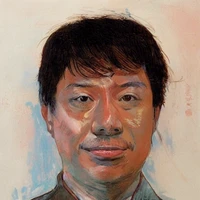
Breaking Language Barriers in Visual Language Models via Multilingual Textual Regularization
Rapid advancements in Visual Language Models (VLMs) have transformed multimodal understanding but are often constrained by generating English responses regardless of the input language. This phenomenon has been termed as Image-induced Fidelity Loss (IFL) and stems from limited multimodal multilingual training data. To address this, we propose a continuous multilingual integration strategy that injects text-only multilingual data during visual instruction tuning, preserving the language model's original multilingual capabilities. Extensive evaluations demonstrate that our approach significantly improves linguistic fidelity across languages without degradation in visual performance. We also explore model merging, which improves language fidelity but comes at the cost of visual performance. In contrast, our core method achieves robust multilingual alignment without trade-offs, offering a scalable and effective path to mitigating IFL for global VLM adoption.


Neural Photometry-guided Visual Attribute Transfer
We present a deep learning-based method for propagating spatially-varying visual material attributes (e.g. texture maps or image stylizations) to larger samples of the same or similar materials. For training, we leverage images of the material taken under multiple illuminations and a dedicated data augmentation policy, making the transfer robust to novel illumination conditions and affine deformations. Our model relies on a supervised image-to-image translation framework and is agnostic to the transferred domain; we showcase a semantic segmentation, a normal map, and a stylization. Following an image analogies approach, the method only requires the training data to contain the same visual structures as the input guidance. Our approach works at interactive rates, making it suitable for material edit applications. We thoroughly evaluate our learning methodology in a controlled setup providing quantitative measures of performance. Last, we demonstrate that training the model on a single material is enough to generalize to materials of the same type without the need for massive datasets.
Towards Fully Automated Manga Translation
We tackle the problem of machine translation of manga, Japanese comics. Manga translation involves two important problems in machine translation: context-aware and multimodal translation. Since text and images are mixed up in an unstructured fashion in Manga, obtaining context from the image is essential for manga translation. However, it is still an open problem how to extract context from image and integrate into MT models. In addition, corpus and benchmarks to train and evaluate such model is currently unavailable. In this paper, we make the following four contributions that establishes the foundation of manga translation research. First, we propose multimodal context-aware translation framework. We are the first to incorporate context information obtained from manga image. It enables us to translate texts in speech bubbles that cannot be translated without using context information (e.g., texts in other speech bubbles, gender of speakers, etc.). Second, for training the model, we propose the approach to automatic corpus construction from pairs of original manga and their translations, by which large parallel corpus can be constructed without any manual labeling. Third, we created a new benchmark to evaluate manga translation. Finally, on top of our proposed methods, we devised a first comprehensive system for fully automated manga translation.
Enhancing Photorealism Enhancement
We present an approach to enhancing the realism of synthetic images. The images are enhanced by a convolutional network that leverages intermediate representations produced by conventional rendering pipelines. The network is trained via a novel adversarial objective, which provides strong supervision at multiple perceptual levels. We analyze scene layout distributions in commonly used datasets and find that they differ in important ways. We hypothesize that this is one of the causes of strong artifacts that can be observed in the results of many prior methods. To address this we propose a new strategy for sampling image patches during training. We also introduce multiple architectural improvements in the deep network modules used for photorealism enhancement. We confirm the benefits of our contributions in controlled experiments and report substantial gains in stability and realism in comparison to recent image-to-image translation methods and a variety of other baselines.

VATEX: A Large-Scale, High-Quality Multilingual Dataset for Video-and-Language Research
We present a new large-scale multilingual video description dataset, VATEX, which contains over 41,250 videos and 825,000 captions in both English and Chinese. Among the captions, there are over 206,000 English-Chinese parallel translation pairs. Compared to the widely-used MSR-VTT dataset, VATEX is multilingual, larger, linguistically complex, and more diverse in terms of both video and natural language descriptions. We also introduce two tasks for video-and-language research based on VATEX: (1) Multilingual Video Captioning, aimed at describing a video in various languages with a compact unified captioning model, and (2) Video-guided Machine Translation, to translate a source language description into the target language using the video information as additional spatiotemporal context. Extensive experiments on the VATEX dataset show that, first, the unified multilingual model can not only produce both English and Chinese descriptions for a video more efficiently, but also offer improved performance over the monolingual models. Furthermore, we demonstrate that the spatiotemporal video context can be effectively utilized to align source and target languages and thus assist machine translation. In the end, we discuss the potentials of using VATEX for other video-and-language research.

Perceptual Losses for Real-Time Style Transfer and Super-Resolution
We consider image transformation problems, where an input image is transformed into an output image. Recent methods for such problems typically train feed-forward convolutional neural networks using a per-pixel loss between the output and ground-truth images. Parallel work has shown that high-quality images can be generated by defining and optimizing perceptual loss functions based on high-level features extracted from pretrained networks. We combine the benefits of both approaches, and propose the use of perceptual loss functions for training feed-forward networks for image transformation tasks. We show results on image style transfer, where a feed-forward network is trained to solve the optimization problem proposed by Gatys et al in real-time. Compared to the optimization-based method, our network gives similar qualitative results but is three orders of magnitude faster. We also experiment with single-image super-resolution, where replacing a per-pixel loss with a perceptual loss gives visually pleasing results.
One Patch to Caption Them All: A Unified Zero-Shot Captioning Framework
Zero-shot captioners are recently proposed models that utilize common-space vision-language representations to caption images without relying on paired image-text data. To caption an image, they proceed by textually decoding a text-aligned image feature, but they limit their scope to global representations and whole-image captions. We present , a unified framework for zero-shot captioning that shifts from an image-centric to a patch-centric paradigm, enabling the captioning of arbitrary regions without the need of region-level supervision. Instead of relying on global image representations, we treat individual patches as atomic captioning units and aggregate them to describe arbitrary regions, from single patches to non-contiguous areas and entire images. We analyze the key ingredients that enable current latent captioners to work in our novel proposed framework. Experiments demonstrate that backbones producing meaningful, dense visual features, such as DINO, are key to achieving state-of-the-art performance in multiple region-based captioning tasks. Compared to other baselines and state-of-the-art competitors, our models achieve better performance on zero-shot dense, region-set, and a newly introduced trace captioning task, highlighting the effectiveness of patch-wise semantic representations for scalable caption generation. Project page at https://paciosoft.com/Patch-ioner/ .



FuseCap: Leveraging Large Language Models to Fuse Visual Data into Enriched Image Captions
Image captioning is a central task in computer vision which has experienced substantial progress following the advent of vision-language pre-training techniques. In this paper, we highlight a frequently overlooked limitation of captioning models that often fail to capture semantically significant elements. This drawback can be traced back to the text-image datasets; while their captions typically offer a general depiction of image content, they frequently omit salient details. To mitigate this limitation, we propose FuseCap - a novel method for enriching captions with additional visual information, obtained from vision experts, such as object detectors, attribute recognizers, and Optical Character Recognizers (OCR). Our approach fuses the outputs of such vision experts with the original caption using a large language model (LLM), yielding enriched captions that present a comprehensive image description. We validate the effectiveness of the proposed caption enrichment method through both quantitative and qualitative analysis. Our method is then used to curate the training set of a captioning model based BLIP which surpasses current state-of-the-art approaches in generating accurate and detailed captions while using significantly fewer parameters and training data. As additional contributions, we provide a dataset comprising of 12M image-enriched caption pairs and show that the proposed method largely improves image-text retrieval.

Modality Translation for Object Detection Adaptation Without Forgetting Prior Knowledge
A common practice in deep learning involves training large neural networks on massive datasets to achieve high accuracy across various domains and tasks. While this approach works well in many application areas, it often fails drastically when processing data from a new modality with a significant distribution shift from the data used to pre-train the model. This paper focuses on adapting a large object detection model trained on RGB images to new data extracted from IR images with a substantial modality shift. We propose Modality Translator (ModTr) as an alternative to the common approach of fine-tuning a large model to the new modality. ModTr adapts the IR input image with a small transformation network trained to directly minimize the detection loss. The original RGB model can then work on the translated inputs without any further changes or fine-tuning to its parameters. Experimental results on translating from IR to RGB images on two well-known datasets show that our simple approach provides detectors that perform comparably or better than standard fine-tuning, without forgetting the knowledge of the original model. This opens the door to a more flexible and efficient service-based detection pipeline, where a unique and unaltered server, such as an RGB detector, runs constantly while being queried by different modalities, such as IR with the corresponding translations model. Our code is available at: https://github.com/heitorrapela/ModTr.
ZeroCap: Zero-Shot Image-to-Text Generation for Visual-Semantic Arithmetic
Recent text-to-image matching models apply contrastive learning to large corpora of uncurated pairs of images and sentences. While such models can provide a powerful score for matching and subsequent zero-shot tasks, they are not capable of generating caption given an image. In this work, we repurpose such models to generate a descriptive text given an image at inference time, without any further training or tuning steps. This is done by combining the visual-semantic model with a large language model, benefiting from the knowledge in both web-scale models. The resulting captions are much less restrictive than those obtained by supervised captioning methods. Moreover, as a zero-shot learning method, it is extremely flexible and we demonstrate its ability to perform image arithmetic in which the inputs can be either images or text, and the output is a sentence. This enables novel high-level vision capabilities such as comparing two images or solving visual analogy tests. Our code is available at: https://github.com/YoadTew/zero-shot-image-to-text.

RealSyn: An Effective and Scalable Multimodal Interleaved Document Transformation Paradigm
After pre-training on extensive image-text pairs, Contrastive Language-Image Pre-training (CLIP) demonstrates promising performance on a wide variety of benchmarks. However, a substantial volume of non-paired data, such as multimodal interleaved documents, remains underutilized for vision-language representation learning. To fully leverage these unpaired documents, we initially establish a Real-World Data Extraction pipeline to extract high-quality images and texts. Then we design a hierarchical retrieval method to efficiently associate each image with multiple semantically relevant realistic texts. To further enhance fine-grained visual information, we propose an image semantic augmented generation module for synthetic text production. Furthermore, we employ a semantic balance sampling strategy to improve dataset diversity, enabling better learning of long-tail concepts. Based on these innovations, we construct RealSyn, a dataset combining realistic and synthetic texts, available in three scales: 15M, 30M, and 100M. Extensive experiments demonstrate that RealSyn effectively advances vision-language representation learning and exhibits strong scalability. Models pre-trained on RealSyn achieve state-of-the-art performance on multiple downstream tasks. To facilitate future research, the RealSyn dataset and pre-trained model weights are released at https://github.com/deepglint/RealSyn.



ArtAdapter: Text-to-Image Style Transfer using Multi-Level Style Encoder and Explicit Adaptation
This work introduces ArtAdapter, a transformative text-to-image (T2I) style transfer framework that transcends traditional limitations of color, brushstrokes, and object shape, capturing high-level style elements such as composition and distinctive artistic expression. The integration of a multi-level style encoder with our proposed explicit adaptation mechanism enables ArtAdapte to achieve unprecedented fidelity in style transfer, ensuring close alignment with textual descriptions. Additionally, the incorporation of an Auxiliary Content Adapter (ACA) effectively separates content from style, alleviating the borrowing of content from style references. Moreover, our novel fast finetuning approach could further enhance zero-shot style representation while mitigating the risk of overfitting. Comprehensive evaluations confirm that ArtAdapter surpasses current state-of-the-art methods.

Map-free Visual Relocalization: Metric Pose Relative to a Single Image
Can we relocalize in a scene represented by a single reference image? Standard visual relocalization requires hundreds of images and scale calibration to build a scene-specific 3D map. In contrast, we propose Map-free Relocalization, i.e., using only one photo of a scene to enable instant, metric scaled relocalization. Existing datasets are not suitable to benchmark map-free relocalization, due to their focus on large scenes or their limited variability. Thus, we have constructed a new dataset of 655 small places of interest, such as sculptures, murals and fountains, collected worldwide. Each place comes with a reference image to serve as a relocalization anchor, and dozens of query images with known, metric camera poses. The dataset features changing conditions, stark viewpoint changes, high variability across places, and queries with low to no visual overlap with the reference image. We identify two viable families of existing methods to provide baseline results: relative pose regression, and feature matching combined with single-image depth prediction. While these methods show reasonable performance on some favorable scenes in our dataset, map-free relocalization proves to be a challenge that requires new, innovative solutions.
Seedream 2.0: A Native Chinese-English Bilingual Image Generation Foundation Model
Rapid advancement of diffusion models has catalyzed remarkable progress in the field of image generation. However, prevalent models such as Flux, SD3.5 and Midjourney, still grapple with issues like model bias, limited text rendering capabilities, and insufficient understanding of Chinese cultural nuances. To address these limitations, we present Seedream 2.0, a native Chinese-English bilingual image generation foundation model that excels across diverse dimensions, which adeptly manages text prompt in both Chinese and English, supporting bilingual image generation and text rendering. We develop a powerful data system that facilitates knowledge integration, and a caption system that balances the accuracy and richness for image description. Particularly, Seedream is integrated with a self-developed bilingual large language model as a text encoder, allowing it to learn native knowledge directly from massive data. This enable it to generate high-fidelity images with accurate cultural nuances and aesthetic expressions described in either Chinese or English. Beside, Glyph-Aligned ByT5 is applied for flexible character-level text rendering, while a Scaled ROPE generalizes well to untrained resolutions. Multi-phase post-training optimizations, including SFT and RLHF iterations, further improve the overall capability. Through extensive experimentation, we demonstrate that Seedream 2.0 achieves state-of-the-art performance across multiple aspects, including prompt-following, aesthetics, text rendering, and structural correctness. Furthermore, Seedream 2.0 has been optimized through multiple RLHF iterations to closely align its output with human preferences, as revealed by its outstanding ELO score. In addition, it can be readily adapted to an instruction-based image editing model, such as SeedEdit, with strong editing capability that balances instruction-following and image consistency.



GIST: Generating Image-Specific Text for Fine-grained Object Classification
Recent vision-language models outperform vision-only models on many image classification tasks. However, because of the absence of paired text/image descriptions, it remains difficult to fine-tune these models for fine-grained image classification. In this work, we propose a method, GIST, for generating image-specific fine-grained text descriptions from image-only datasets, and show that these text descriptions can be used to improve classification. Key parts of our method include 1. prompting a pretrained large language model with domain-specific prompts to generate diverse fine-grained text descriptions for each class and 2. using a pretrained vision-language model to match each image to label-preserving text descriptions that capture relevant visual features in the image. We demonstrate the utility of GIST by fine-tuning vision-language models on the image-and-generated-text pairs to learn an aligned vision-language representation space for improved classification. We evaluate our learned representation space in full-shot and few-shot scenarios across four diverse fine-grained classification datasets, each from a different domain. Our method achieves an average improvement of 4.1% in accuracy over CLIP linear probes and an average of 1.1% improvement in accuracy over the previous state-of-the-art image-text classification method on the full-shot datasets. Our method achieves similar improvements across few-shot regimes. Code is available at https://github.com/emu1729/GIST.

Image-to-Image Translation with Conditional Adversarial Networks
We investigate conditional adversarial networks as a general-purpose solution to image-to-image translation problems. These networks not only learn the mapping from input image to output image, but also learn a loss function to train this mapping. This makes it possible to apply the same generic approach to problems that traditionally would require very different loss formulations. We demonstrate that this approach is effective at synthesizing photos from label maps, reconstructing objects from edge maps, and colorizing images, among other tasks. Indeed, since the release of the pix2pix software associated with this paper, a large number of internet users (many of them artists) have posted their own experiments with our system, further demonstrating its wide applicability and ease of adoption without the need for parameter tweaking. As a community, we no longer hand-engineer our mapping functions, and this work suggests we can achieve reasonable results without hand-engineering our loss functions either.
Visual-Text Cross Alignment: Refining the Similarity Score in Vision-Language Models
It has recently been discovered that using a pre-trained vision-language model (VLM), e.g., CLIP, to align a whole query image with several finer text descriptions generated by a large language model can significantly enhance zero-shot performance. However, in this paper, we empirically find that the finer descriptions tend to align more effectively with local areas of the query image rather than the whole image, and then we theoretically validate this finding. Thus, we present a method called weighted visual-text cross alignment (WCA). This method begins with a localized visual prompting technique, designed to identify local visual areas within the query image. The local visual areas are then cross-aligned with the finer descriptions by creating a similarity matrix using the pre-trained VLM. To determine how well a query image aligns with each category, we develop a score function based on the weighted similarities in this matrix. Extensive experiments demonstrate that our method significantly improves zero-shot performance across various datasets, achieving results that are even comparable to few-shot learning methods.


uCLIP: Parameter-Efficient Multilingual Extension of Vision-Language Models with Unpaired Data
Contrastive Language-Image Pre-training (CLIP) has demonstrated strong generalization across a wide range of visual tasks by leveraging large-scale English-image pairs. However, its extension to low-resource languages remains limited due to the scarcity of high-quality multilingual image-text data. Existing multilingual vision-language models exhibit consistently low retrieval performance in underrepresented languages including Czech, Finnish, Croatian, Hungarian, and Romanian on the Crossmodal-3600 (XM3600) benchmark. To address this, we propose a lightweight and data-efficient framework for multilingual vision-language alignment. Our approach requires no image-text pairs or text-text pairs and freezes both the pretrained image encoder and multilingual text encoder during training. Only a compact 1.7M-parameter projection module is trained, using a contrastive loss over English representations as semantic anchors. This minimal training setup enables robust multilingual alignment even for languages with limited supervision. Extensive evaluation across multiple multilingual retrieval benchmarks confirms the effectiveness of our method, showing significant gains in five underrepresented languages where existing models typically underperform. These findings highlight the effectiveness of our pivot-based, parameter-efficient alignment strategy for inclusive multimodal learning.
Altogether: Image Captioning via Re-aligning Alt-text
This paper focuses on creating synthetic data to improve the quality of image captions. Existing works typically have two shortcomings. First, they caption images from scratch, ignoring existing alt-text metadata, and second, lack transparency if the captioners' training data (e.g. GPT) is unknown. In this paper, we study a principled approach Altogether based on the key idea to edit and re-align existing alt-texts associated with the images. To generate training data, we perform human annotation where annotators start with the existing alt-text and re-align it to the image content in multiple rounds, consequently constructing captions with rich visual concepts. This differs from prior work that carries out human annotation as a one-time description task solely based on images and annotator knowledge. We train a captioner on this data that generalizes the process of re-aligning alt-texts at scale. Our results show our Altogether approach leads to richer image captions that also improve text-to-image generation and zero-shot image classification tasks.


GIIFT: Graph-guided Inductive Image-free Multimodal Machine Translation
Multimodal Machine Translation (MMT) has demonstrated the significant help of visual information in machine translation. However, existing MMT methods face challenges in leveraging the modality gap by enforcing rigid visual-linguistic alignment whilst being confined to inference within their trained multimodal domains. In this work, we construct novel multimodal scene graphs to preserve and integrate modality-specific information and introduce GIIFT, a two-stage Graph-guided Inductive Image-Free MMT framework that uses a cross-modal Graph Attention Network adapter to learn multimodal knowledge in a unified fused space and inductively generalize it to broader image-free translation domains. Experimental results on the Multi30K dataset of English-to-French and English-to-German tasks demonstrate that our GIIFT surpasses existing approaches and achieves the state-of-the-art, even without images during inference. Results on the WMT benchmark show significant improvements over the image-free translation baselines, demonstrating the strength of GIIFT towards inductive image-free inference.
Multilingual-To-Multimodal (M2M): Unlocking New Languages with Monolingual Text
Multimodal models excel in English, supported by abundant image-text and audio-text data, but performance drops sharply for other languages due to limited multilingual multimodal resources. Existing solutions rely heavily on machine translation, while advances in multilingual text modeling remain underutilized. We introduce METAL, a lightweight alignment method that learns only a few linear layers using English text alone to map multilingual text embeddings into a multimodal space. Despite its simplicity, METAL matches baseline performance in English (94.9 percent Recall at 10) and achieves strong zero-shot transfer (89.5 percent Recall at 10 averaged across 11 languages, 10 unseen) on XTD text-to-image retrieval. Qualitative t-SNE visualizations show that multilingual embeddings align tightly with multimodal representations, while weight analysis reveals that the transformation reshapes embedding geometry rather than performing trivial rotations. Beyond image-text retrieval, METAL generalizes to audio-text retrieval and cross-lingual text-to-image generation. We release code and checkpoints at https://github.com/m2m-codebase/M2M , as well as multilingual evaluation datasets including MSCOCO Multilingual 30K (https://huggingface.co/datasets/piyushsinghpasi/mscoco-multilingual-30k ), AudioCaps Multilingual (https://huggingface.co/datasets/piyushsinghpasi/audiocaps-multilingual ), and Clotho Multilingual (https://huggingface.co/datasets/piyushsinghpasi/clotho-multilingual ), to facilitate further research.
ViTamin: Designing Scalable Vision Models in the Vision-Language Era
Recent breakthroughs in vision-language models (VLMs) start a new page in the vision community. The VLMs provide stronger and more generalizable feature embeddings compared to those from ImageNet-pretrained models, thanks to the training on the large-scale Internet image-text pairs. However, despite the amazing achievement from the VLMs, vanilla Vision Transformers (ViTs) remain the default choice for the image encoder. Although pure transformer proves its effectiveness in the text encoding area, it remains questionable whether it is also the case for image encoding, especially considering that various types of networks are proposed on the ImageNet benchmark, which, unfortunately, are rarely studied in VLMs. Due to small data/model scale, the original conclusions of model design on ImageNet can be limited and biased. In this paper, we aim at building an evaluation protocol of vision models in the vision-language era under the contrastive language-image pretraining (CLIP) framework. We provide a comprehensive way to benchmark different vision models, covering their zero-shot performance and scalability in both model and training data sizes. To this end, we introduce ViTamin, a new vision models tailored for VLMs. ViTamin-L significantly outperforms ViT-L by 2.0% ImageNet zero-shot accuracy, when using the same publicly available DataComp-1B dataset and the same OpenCLIP training scheme. ViTamin-L presents promising results on 60 diverse benchmarks, including classification, retrieval, open-vocabulary detection and segmentation, and large multi-modal models. When further scaling up the model size, our ViTamin-XL with only 436M parameters attains 82.9% ImageNet zero-shot accuracy, surpassing 82.0% achieved by EVA-E that has ten times more parameters (4.4B).

xT: Nested Tokenization for Larger Context in Large Images
Modern computer vision pipelines handle large images in one of two sub-optimal ways: down-sampling or cropping. These two methods incur significant losses in the amount of information and context present in an image. There are many downstream applications in which global context matters as much as high frequency details, such as in real-world satellite imagery; in such cases researchers have to make the uncomfortable choice of which information to discard. We introduce xT, a simple framework for vision transformers which effectively aggregates global context with local details and can model large images end-to-end on contemporary GPUs. We select a set of benchmark datasets across classic vision tasks which accurately reflect a vision model's ability to understand truly large images and incorporate fine details over large scales and assess our method's improvement on them. By introducing a nested tokenization scheme for large images in conjunction with long-sequence length models normally used for natural language processing, we are able to increase accuracy by up to 8.6% on challenging classification tasks and F_1 score by 11.6 on context-dependent segmentation in large images.



DiffV2IR: Visible-to-Infrared Diffusion Model via Vision-Language Understanding
The task of translating visible-to-infrared images (V2IR) is inherently challenging due to three main obstacles: 1) achieving semantic-aware translation, 2) managing the diverse wavelength spectrum in infrared imagery, and 3) the scarcity of comprehensive infrared datasets. Current leading methods tend to treat V2IR as a conventional image-to-image synthesis challenge, often overlooking these specific issues. To address this, we introduce DiffV2IR, a novel framework for image translation comprising two key elements: a Progressive Learning Module (PLM) and a Vision-Language Understanding Module (VLUM). PLM features an adaptive diffusion model architecture that leverages multi-stage knowledge learning to infrared transition from full-range to target wavelength. To improve V2IR translation, VLUM incorporates unified Vision-Language Understanding. We also collected a large infrared dataset, IR-500K, which includes 500,000 infrared images compiled by various scenes and objects under various environmental conditions. Through the combination of PLM, VLUM, and the extensive IR-500K dataset, DiffV2IR markedly improves the performance of V2IR. Experiments validate DiffV2IR's excellence in producing high-quality translations, establishing its efficacy and broad applicability. The code, dataset, and DiffV2IR model will be available at https://github.com/LidongWang-26/DiffV2IR.
Beyond English-Centric Multilingual Machine Translation
Existing work in translation demonstrated the potential of massively multilingual machine translation by training a single model able to translate between any pair of languages. However, much of this work is English-Centric by training only on data which was translated from or to English. While this is supported by large sources of training data, it does not reflect translation needs worldwide. In this work, we create a true Many-to-Many multilingual translation model that can translate directly between any pair of 100 languages. We build and open source a training dataset that covers thousands of language directions with supervised data, created through large-scale mining. Then, we explore how to effectively increase model capacity through a combination of dense scaling and language-specific sparse parameters to create high quality models. Our focus on non-English-Centric models brings gains of more than 10 BLEU when directly translating between non-English directions while performing competitively to the best single systems of WMT. We open-source our scripts so that others may reproduce the data, evaluation, and final M2M-100 model.

Patch Matters: Training-free Fine-grained Image Caption Enhancement via Local Perception
High-quality image captions play a crucial role in improving the performance of cross-modal applications such as text-to-image generation, text-to-video generation, and text-image retrieval. To generate long-form, high-quality captions, many recent studies have employed multimodal large language models (MLLMs). However, current MLLMs often produce captions that lack fine-grained details or suffer from hallucinations, a challenge that persists in both open-source and closed-source models. Inspired by Feature-Integration theory, which suggests that attention must focus on specific regions to integrate visual information effectively, we propose a divide-then-aggregate strategy. Our method first divides the image into semantic and spatial patches to extract fine-grained details, enhancing the model's local perception of the image. These local details are then hierarchically aggregated to generate a comprehensive global description. To address hallucinations and inconsistencies in the generated captions, we apply a semantic-level filtering process during hierarchical aggregation. This training-free pipeline can be applied to both open-source models (LLaVA-1.5, LLaVA-1.6, Mini-Gemini) and closed-source models (Claude-3.5-Sonnet, GPT-4o, GLM-4V-Plus). Extensive experiments demonstrate that our method generates more detailed, reliable captions, advancing multimodal description generation without requiring model retraining. The source code are available at https://github.com/GeWu-Lab/Patch-Matters
FLAIR: VLM with Fine-grained Language-informed Image Representations
CLIP has shown impressive results in aligning images and texts at scale. However, its ability to capture detailed visual features remains limited because CLIP matches images and texts at a global level. To address this issue, we propose FLAIR, Fine-grained Language-informed Image Representations, an approach that utilizes long and detailed image descriptions to learn localized image embeddings. By sampling diverse sub-captions that describe fine-grained details about an image, we train our vision-language model to produce not only global embeddings but also text-specific image representations. Our model introduces text-conditioned attention pooling on top of local image tokens to produce fine-grained image representations that excel at retrieving detailed image content. We achieve state-of-the-art performance on both, existing multimodal retrieval benchmarks, as well as, our newly introduced fine-grained retrieval task which evaluates vision-language models' ability to retrieve partial image content. Furthermore, our experiments demonstrate the effectiveness of FLAIR trained on 30M image-text pairs in capturing fine-grained visual information, including zero-shot semantic segmentation, outperforming models trained on billions of pairs. Code is available at https://github.com/ExplainableML/flair .

Language-Image Alignment with Fixed Text Encoders
Currently, the most dominant approach to establishing language-image alignment is to pre-train text and image encoders jointly through contrastive learning, such as CLIP and its variants. In this work, we question whether such a costly joint training is necessary. In particular, we investigate if a pre-trained fixed large language model (LLM) offers a good enough text encoder to guide visual representation learning. That is, we propose to learn Language-Image alignment with a Fixed Text encoder (LIFT) from an LLM by training only the image encoder. Somewhat surprisingly, through comprehensive benchmarking and ablation studies, we find that this much simplified framework LIFT is highly effective and it outperforms CLIP in most scenarios that involve compositional understanding and long captions, while achieving considerable gains in computational efficiency. Our work takes a first step towards systematically exploring how text embeddings from LLMs can guide visual learning and suggests an alternative design choice for learning language-aligned visual representations.



Synth^2: Boosting Visual-Language Models with Synthetic Captions and Image Embeddings
The creation of high-quality human-labeled image-caption datasets presents a significant bottleneck in the development of Visual-Language Models (VLMs). We propose a novel approach that leverages the strengths of Large Language Models (LLMs) and image generation models to create synthetic image-text pairs for efficient and effective VLM training. Our method employs pretraining a text-to-image model to synthesize image embeddings starting from captions generated by an LLM. These synthetic pairs are then used to train a VLM. Extensive experiments demonstrate that the VLM trained with synthetic data exhibits comparable performance on image captioning, while requiring a fraction of the data used by models trained solely on human-annotated data. In particular, we outperform the baseline by 17% through augmentation with a synthetic dataset. Furthermore, we show that synthesizing in the image embedding space is 25% faster than in the pixel space. This research introduces a promising technique for generating large-scale, customizable image datasets, leading to enhanced VLM performance and wider applicability across various domains, all with improved data efficiency and resource utilization.


Make-A-Scene: Scene-Based Text-to-Image Generation with Human Priors
Recent text-to-image generation methods provide a simple yet exciting conversion capability between text and image domains. While these methods have incrementally improved the generated image fidelity and text relevancy, several pivotal gaps remain unanswered, limiting applicability and quality. We propose a novel text-to-image method that addresses these gaps by (i) enabling a simple control mechanism complementary to text in the form of a scene, (ii) introducing elements that substantially improve the tokenization process by employing domain-specific knowledge over key image regions (faces and salient objects), and (iii) adapting classifier-free guidance for the transformer use case. Our model achieves state-of-the-art FID and human evaluation results, unlocking the ability to generate high fidelity images in a resolution of 512x512 pixels, significantly improving visual quality. Through scene controllability, we introduce several new capabilities: (i) Scene editing, (ii) text editing with anchor scenes, (iii) overcoming out-of-distribution text prompts, and (iv) story illustration generation, as demonstrated in the story we wrote.

Unsupervised Deep Learning-based Pansharpening with Jointly-Enhanced Spectral and Spatial Fidelity
In latest years, deep learning has gained a leading role in the pansharpening of multiresolution images. Given the lack of ground truth data, most deep learning-based methods carry out supervised training in a reduced-resolution domain. However, models trained on downsized images tend to perform poorly on high-resolution target images. For this reason, several research groups are now turning to unsupervised training in the full-resolution domain, through the definition of appropriate loss functions and training paradigms. In this context, we have recently proposed a full-resolution training framework which can be applied to many existing architectures. Here, we propose a new deep learning-based pansharpening model that fully exploits the potential of this approach and provides cutting-edge performance. Besides architectural improvements with respect to previous work, such as the use of residual attention modules, the proposed model features a novel loss function that jointly promotes the spectral and spatial quality of the pansharpened data. In addition, thanks to a new fine-tuning strategy, it improves inference-time adaptation to target images. Experiments on a large variety of test images, performed in challenging scenarios, demonstrate that the proposed method compares favorably with the state of the art both in terms of numerical results and visual output. Code is available online at https://github.com/matciotola/Lambda-PNN.

Screentone-Preserved Manga Retargeting
As a popular comic style, manga offers a unique impression by utilizing a rich set of bitonal patterns, or screentones, for illustration. However, screentones can easily be contaminated with visual-unpleasant aliasing and/or blurriness after resampling, which harms its visualization on displays of diverse resolutions. To address this problem, we propose the first manga retargeting method that synthesizes a rescaled manga image while retaining the screentone in each screened region. This is a non-trivial task as accurate region-wise segmentation remains challenging. Fortunately, the rescaled manga shares the same region-wise screentone correspondences with the original manga, which enables us to simplify the screentone synthesis problem as an anchor-based proposals selection and rearrangement problem. Specifically, we design a novel manga sampling strategy to generate aliasing-free screentone proposals, based on hierarchical grid-based anchors that connect the correspondences between the original and the target rescaled manga. Furthermore, a Recurrent Proposal Selection Module (RPSM) is proposed to adaptively integrate these proposals for target screentone synthesis. Besides, to deal with the translation insensitivity nature of screentones, we propose a translation-invariant screentone loss to facilitate the training convergence. Extensive qualitative and quantitative experiments are conducted to verify the effectiveness of our method, and notably compelling results are achieved compared to existing alternative techniques.
M3P: Learning Universal Representations via Multitask Multilingual Multimodal Pre-training
We present M3P, a Multitask Multilingual Multimodal Pre-trained model that combines multilingual pre-training and multimodal pre-training into a unified framework via multitask pre-training. Our goal is to learn universal representations that can map objects occurred in different modalities or texts expressed in different languages into a common semantic space. In addition, to explicitly encourage fine-grained alignment between images and non-English languages, we also propose Multimodal Code-switched Training (MCT) to combine monolingual pre-training and multimodal pre-training via a code-switch strategy. Experiments are performed on the multilingual image retrieval task across two benchmark datasets, including MSCOCO and Multi30K. M3P can achieve comparable results for English and new state-of-the-art results for non-English languages.